Ask the Expert: Upstate New York Nathan Shock Center Director Vera Gorbunova, PhD, discusses the center's focus on the study of comparative aging biology
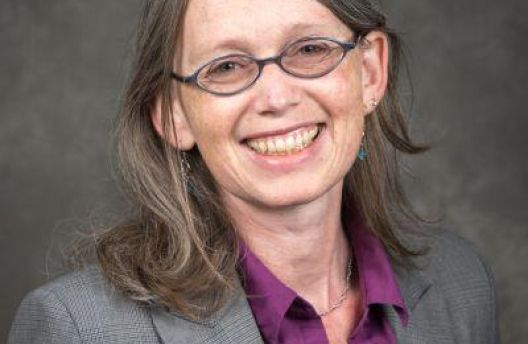
Vera Gorbunova, PhD
Doris Johns Cherry Professor of Biology and Medicine, Department of Biology, University of Rochester, Rochester, New York
Co-director, Rochester Aging Research Center
Center Director, Upstate New York Nathan Shock Center
There are eight Nathan Shock Centers in the Biology of Aging, funded by the National Institute on Aging of the National Institutes of Health. The centers provide leadership in the pursuit of basic research into the biology of aging. Each center brings unique expertise under the leadership of respected experts in the field. AFAR, which manages the Nathan Shock Centers of Excellence in the Biology of Aging Coordinating Center (NSC3) (U24AG056053), will highlight the work of these centers through this series.
Dr. Vera Gorbunova directs the Upstate New York Nathan Shock Center at the University of Rochester. The Center facilitates the study of comparative aging biology by placing an emphasis on species diversity — providing the animals, tissues, biobank, and omics tools that let researchers everywhere study aging beyond the standard murine models. Models include unusual, long-lived, and non-standard species to uncover the mechanisms behind healthy aging. Its services are organized across five cores (Live Animal Resource Core, Unconventional Invertebrate Model Core, Frozen Zoo Biobank Resource Core, Comparative Omics Core, and the Research Development Core.
Dr. Gorbunova’s own research pioneered a comparative approach to aging, studying exceptionally long-lived species. Her work revealed that high-molecular-weight hyaluronic acid underlies the naked mole rat's remarkable cancer resistance—and her team later transferred that gene to mice, improving their health and extending lifespan. She has also shown that longer-lived species have more efficient DNA repair, and that “reawakened” transposons drive age-related inflammation and contribute to genome stability. With over 100 publications, Gorbunova has helped establish genome integrity and comparative biology as central pillars of modern geroscience.
AFAR spoke with Dr. Gorbunova about her work, and her responses were edited for brevity.
How did you first become interested in aging research, and what led you to the comparative approach — studying exceptionally long-lived animals — when so much of the field was focused on short-lived organisms like yeast, worms, and mice?
I became interested in aging research in college. A guest speaker gave a lecture on the Hayflick limit and how human cells have a limited lifespan. The concept of a molecular mechanism controlling the lifespan of an organism seemed so elegant to me. Of course, we no longer think the Hayflick limit is what controls lifespan, but it made me start thinking about aging. I was fascinated by how fundamental the problem is—essentially every living organism ages—and yet it is a problem that sits so close to medicine. It touches everybody. Many questions in biology are interesting, but this one is not only interesting; it is also important for everyone. Receiving an AFAR grant for new investigators in 2005, just as I was starting out as an assistant professor, was very important as well. Getting that first grant gives you courage, and it helps you pursue the grants that follow.
As for the comparative approach: my strategy was to learn from evolution. The more traditional approach is to take a short-lived organism, manipulate it in some way, and see whether you can extend its lifespan. But with that approach, we are essentially tinkering—we may find solutions, but are they compatible with healthy life? A change in one place may have a negative effect somewhere else. The strategies that evolved in long-lived species, by contrast, have been tested over millions of years, because those animals had to survive in the wild. We know they work. Our job is to learn how they work and how to transfer them so that people can benefit. To me, it is a matter of looking for answers directly where they are—not where it is easiest to look.
You direct the Rochester Nathan Shock Center of Excellence in the Basic Biology of Aging. How is the Center organized, and what unique expertise and resources does it bring to the national Nathan Shock network?
Our Shock Center is focused on comparative biology, because we want to understand long, healthy lifespan—and that means going to the species that have already achieved it. For investigators who want to pursue these approaches, there are real hurdles: Where do you obtain the organisms? Where do you obtain samples? How do you design experiments that are anything but standard? That is exactly where our Center helps. We have the expertise; we maintain specimens from long-lived organisms, and we have designed experiments with them. When people come to us, we share samples and help with experimental design and data interpretation. In this way, we can bring more researchers—with many different areas of expertise—into the study of long-lived organisms.
Comparative biology is central to your work. For a broad audience, what can species like the mole rat teach us about human aging that we can't learn from traditional lab models?
It is important to note that we do not learn about human aging from these animals—we learn the mechanisms by which these animals achieve greater health and longer life, and then we work on ways to implement those strategies to improve human aging. From the naked mole rat, for example, we learned that a high molecular weight hyaluronic acid these animals produce in abundance can suppress inflammation, extend lifespan, and protect against cancer. Now we are studying how to increase levels of that molecule in people. And across exceptionally long-lived species more broadly, we consistently find highly efficient DNA repair, so we are looking for ways to enhance DNA repair in humans as well. These are lessons the traditional mouse or rat model simply could not have taught us.
Your team recently showed that a longevity gene from naked mole rats — responsible for high-molecular-weight hyaluronic acid — could be transferred to mice, improving their health and extending lifespan. What did that milestone demonstrate, and where does that work go next?
It demonstrated that a longevity mechanism from one species can be successfully transferred to another—and confer a benefit. Now we are studying ways to increase the level of high molecular weight hyaluronic acid in human tissues. We are also examining in more depth how the extracellular matrix of the naked mole rat—the scaffolding that surrounds its cells—is organized. There may be other unique components there, and among them, other potential drug targets.
Beyond the science itself, what do you see as the biggest challenges facing aging research right now — whether translating discoveries from long-lived animals to humans, or supporting the next generation of investigators? How does the Nathan Shock Center program help?
The biggest challenge right now is uncertainty in research funding, which is especially demoralizing for young investigators. Our pilot grants directly target this issue; we are trying to support young investigators in every way we can. Scientifically, the challenge is that we need the next breakthrough. In model organisms, we can extend lifespan by perhaps 10 or 20 percent, yet between species we see tenfold, even hundredfold differences in lifespan. Understanding how to change lifespan on that scale will require a real breakthrough, and that is where I hope comparative biology will lead the way.
As Co-Director of the Rochester Aging Research Center and a mentor to many trainees, how do you approach building the teams and cross-disciplinary collaborations that this kind of comparative, multi-species research requires?
Team science is very productive, and what you need is a group of individuals who are excited about what they do and who want to work together. That is what we are building in the Center, and we are very happy to spread our knowledge, our resources, and our passion to the broader scientific community.
Where would you like to see the biology of aging field in the next decade, and what role do you hope comparative approaches — and the Nathan Shock Centers — will play in getting there?
I would like to see us understand the fundamental mechanisms that control lifespan—to know how lifespan is controlled well enough that we can modify aging in people and develop interventions that keep people healthier for a longer time. The Shock Centers make their contribution by enabling more team science and more sharing of resources across the field.
If there is one thing I would want the public to understand, it is this: aging can be modified, and aging is the biggest risk factor for human disease. If we learn how to control aging, we address many diseases at once. And who has solved this problem best? Evolution—it has already generated species that are extremely long-lived and disease-resistant. What is important is that these are wild animals. They do not have the luxury of assisted living; they have to fight for survival every day. The mechanisms we find in them are mechanisms of very healthy longevity—and that is what we want for every person: to thrive and to stay active and engaged until the very last day.