Ask the Expert: NIA Director Richard J. Hodes, MD, on the longstanding NIA-AFAR partnership, the future of the field, and his 2026 Irving S. Wright Award of Distinction
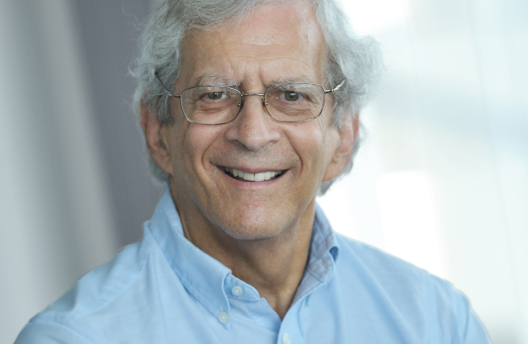
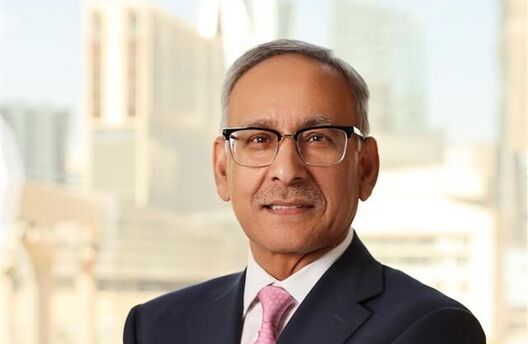
Richard J. Hodes, MD
Director, National Institute on Aging, National Institutes of Health, Bethesda, MD
2026 Irving S. Wright Award of Distinction
A physician-scientist and immunologist, Dr. Richard J. Hodes has served as Director of the National Institute on Aging (NIA) at the National Institutes of Health since 1993. He has devoted his tenure at NIA to the development of a strong, diverse, and balanced research program, focusing on the genetics and biology of aging, age-related cognitive change, basic and clinical studies aimed at reducing disease, and investigations of the behavioral and social aspects of aging, as well as directing the federal effort to find effective ways to treat and prevent Alzheimer's disease and to improve care for those living with dementia. This year, AFAR honors Dr. Hodes with the 2026 Irving S. Wright Award of Distinction, which recognizes exceptional contributions to basic or clinical research in the field of aging. He will receive the award and deliver the award lecture at the Gerontological Society of America Annual Scientific Meeting in National Harbor, Maryland, in November.
In conversation with AFAR Scientific Director Steven N. Austad, PhD, Dr. Hodes reflected on his path from immunology to aging research, milestones from his tenure at NIA in part one of this interview. Here he discusses the long partnership between NIA and AFAR, and where the field is headed. The discussion has been edited for clarity and length.
Part II: Partnership and the Future
How have NIA and AFAR worked together over the years?
NIA was founded in 1974, and AFAR followed in 1981. Since then, it's been a fantastic partnership. Each organization has its own activities, but there's great overlap.
The Nathan Shock Centers of Excellence in the Basic Biology of Aging are an important infrastructure that has moved research forward, and AFAR serves as their coordinating center. AFAR also leads the coordinating center for NIA's broader centers programs, which coordinates research across the Institute's multiple centers. For translational and clinical research, Clin-STAR, which brings clinician-scientists into aging research, has been a wonderful joint venture. For early career development, AFAR's involvement in the Beeson program has been remarkable; it's one of the most effective career development (K) programs across NIH. And AFAR has its own programs as well, including conversations like this one.
So thank you. I look forward to many more years, and decades, of partnership, for us and for the people who will follow us in this field.
When AFAR was first founded, there was very little interaction with NIA. Now our missions and programs overlap in many ways. Things are changing so rapidly; where do you see the field going over the next decade or so?
What we've talked about is the exciting pace of progress up to now, and I can only see it continuing and perhaps even accelerating. We're learning more about the complex factors that change with aging and gaining the ability to measure them in individuals, with biomarkers in both preclinical models and human disease. That's moving us toward something that has long been talked about and is becoming a reality: precision medicine, in which we understand what's happening in each individual, and in individual organs and tissues, which don't age in synchrony. Translating that into diagnostics, prevention, and treatment is exciting, uncharted territory.
If we simply plot the trajectory of discovery into the future, we can't help but be enthusiastic. Technologies like machine learning and superintelligence are augmenting even the considerable capacities of researchers themselves. Thirty years ago, we couldn't have anticipated where we are now. I hope that years from now, we'll look back on this moment with appreciation for all that was happening, but maybe also with amusement at how much further we will have come.
Do you think by the year 2150, at least 1 person will have lived to 150?
This is an ongoing discussion between the biologists and the demographers, and I don't know who's going to be right. I think what is even more important than how long the longest-lived individual can live is how far we can extend healthspan, or the proportion of life spent in good health, for whole populations, nationally and globally. I am hopeful that our research efforts to support healthspan will be successful in helping people live longer, healthier lives.
Aging has become high profile. What advice do you have for people thinking about entering aging research?
I can only emphasize what an exciting and dynamic field aging research is. When I entered it, aging research was just taking its first steps toward the forefront of discovery. Now it's there. There's no more dynamic area.
My advice? There are now many investigators who are committed to training. So seek out, from among the many, the mentors who would be excited to help you move forward in the field. Don't be shy; don't be bashful.
From NIA's perspective, my advice is not to hesitate at all to get in touch with us. Our program officers and staff live for your careers and your successes and are happy to work with you. Several programs are designed to help, and AFAR has been an incredibly important partner in this. The Butler-Williams Scholars Program brings early-career investigators to NIH for a week to meet leaders in the field, including NIA leadership, and to take part in activities such as a mock review of an application, so they learn how best to approach peer review.
I also want to emphasize that NIA's training office is a dedicated and knowledgeable group. There are so many training and career development opportunities that it pays to navigate them in an informed way, so take advantage of their advice. Nothing is more gratifying for us.
Dr. Hodes discussed his research career and tenure at the NIA in Part 1 here.