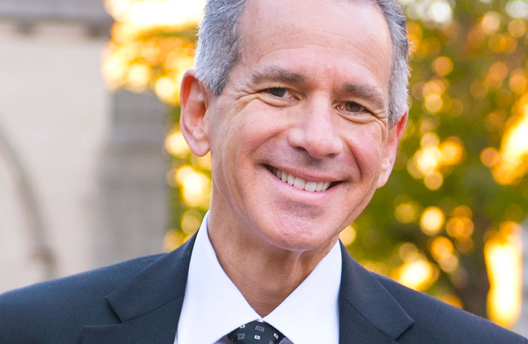
Ask the Expert: Wisconsin Nathan Shock Center Director Rozalyn Anderson, PhD, discusses the center's focus on the role of metabolism in aging
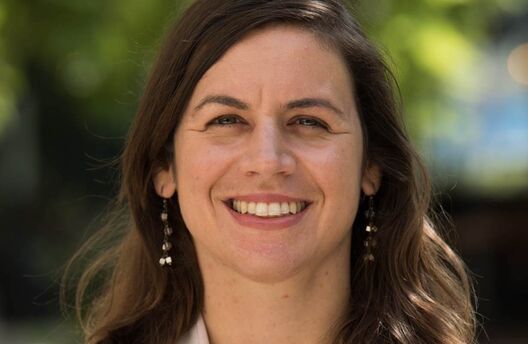
Rozalyn Anderson, PhD
Wisconsin Nathan Shock Center, Director
There are eight Nathan Shock Centers in the Biology of Aging, funded by the National Institute on Aging of the National Institutes of Health. The centers provide leadership in the pursuit of basic research into the biology of aging. Each center brings unique expertise under the leadership of respected experts in the field. AFAR, which manages the Nathan Shock Centers of Excellence in the Biology of Aging Coordinating Center (NSC3)
(U24AG056053), will highlight the work of these centers through this series.
Dr. Rozalyn Anderson directs the Wisconsin Nathan Shock Center of Excellence in the Basic Biology of Aging (WiNSC), alongside co-directors Dudley Lamming, PhD, and John Denu, PhD. The WiNSC focuses on the role of metabolism in aging and unites about 50 investigators across the University of Wisconsin–Madison (UW-Madison) campus. WiNSC supports longitudinal assessment of energetics and aging biology, multi-omic discovery and data integration, and translation of metabolic interventions, along with pilot funding and training mechanisms designed to draw new investigators into aging research.
A recipient of AFAR's Breakthroughs in Gerontology Award, Dr. Anderson is a past president of the American Aging Association and a Fellow of the Gerontological Society of America. AFAR spoke with Dr. Anderson about her work; her responses have been edited for length and clarity.
The Wisconsin Nathan Shock Center is one of the newest additions to the Nathan Shock Center family, and it is focused on metabolism and aging. Why is metabolism the right organizing theme for a center of excellence in the basic biology of aging?
Energetics is central to all of this. Metabolism provides the fuel for energy, but it is also a source of information – decisions are made based on where the energy comes from and where it is used. Energetics controls how a cell responds to a stimulus. No matter what happens in a cell, it has a cost. Cells have to balance their budget— what they are spending against what they hold in reserve. There is knowledge in the system, and metabolism sits on top of that; that is how decisions get made. Nothing takes place without a metabolic response. Any input, any ask, means a change has to happen. It is beautifully complex and fundamental to biology.
Metabolism has always been an interest of mine, and it is a real strength on this campus. But WiNSC is about more than metabolism; it is metabolism and translation. UW–Madison has a great many aging and aging-adjacent interests across its research and teaching portfolio. Through my teaching, I found an informal metabolism network on campus and could see that much of the research was directly relevant to aging and aging-adjacent topics.
Biochemistry has long been a strength at UW-Madison, and so many resources existed at the medical campus and the main campus. The idea was to connect these elements, bringing an interdisciplinary community of scholars together.
You've described WiNSC as "a gathering of minds rather than a building of rooms"—a virtual center that now spans about 50 researchers across the UW–Madison campus, from molecules to organisms to populations. How does that cross-campus structure shape the kind of science the Center can do?
UW–Madison is one continuous campus, but it is huge—the School of Medicine and Public Health sits on the west side of the main campus—and that geography creates silos. Cross-campus initiatives can become unbalanced, focusing on one area more than others. Much of my teaching is at the graduate-school level rather than in the medical school. By taking that walk across campus, I began to recognize other aspects of research that could be applied to aging all over the university. Through that, I learned and expanded my own thinking and projects. I have said repeatedly to colleagues, “You don’t know it, but you are an aging researcher.” Professionally, I have really enjoyed being part of and expanding those networks.
The campus culture is very collaborative, and aging, being discipline-agnostic, opens the door to more opportunities. It allows bench scientists, translational scientists, and preclinical researchers to work alongside those engaged in clinical practice. The span of disciplines is huge, so we keep the doors open and encourage people to come in.
Can you walk us through the Center's research cores—the Energetics of Longevity Core, the Discovery & Integration Core, and the Translation & Application Core—and how they work together to serve researchers both at Wisconsin and nationally?
The Center serves as a hub to connect people. That is the single most important thing we do. We leverage investments that have already been made on campus, taking advantage of cutting-edge technologies here at UW-Madison. The difference between us and a traditional core is that we provide expert advice on the science along with the resource. UW–Madison is home to an Institute for Clinical and Translational Research, the Wisconsin National Primate Research Center, and an Alzheimer’s Disease Research Center, as well as 4 human longitudinal studies of aging that span decades. We leverage those resources within our cores to build new capabilities and connect people across diverse areas of investigation.
Our research Cores are founded on infrastructure and expertise of the UW-Madison campus. For example, the Energetics of Longevity Core, led by Dudley Lamming, performs metabolite tracing in animals. This method tracks where molecules go and which tissues are using them. Ordinarily, studies look at a single static moment; these tracing studies are dynamic and show us the whole story over time.
Another core reflects the fact that we are in an era of very large datasets, and the literature shows many different types of analysis. Our goal is to have data scientists and biologists work together to identify the best analysis for each question. Rather than a fee-for-service model, the Discovery & Integration Core brings people together to really investigate the landscape of the data. This Core includes the Molecular Profiling Hub, where all the “omics” are housed, and the Data Science Partnership—we like to say we are the eHarmony for biology and data science.
We also have an Innovation Kitchen, where we put funds into the hands of experts to develop new pipelines and capabilities—tools that others can use. Judith Simcox was instrumental in Year 1: she developed a lipidomic platform and upgraded global metabolomics to capture features that standard approaches miss. Those capabilities now live in the UW Biotechnology Center, where they are widely available to anyone for use.
The Translation & Application Core includes a nonhuman primate pipeline with a large dataset and repository. Ricki Colman runs this resource, and it is very translationally relevant: investigators can access samples collected over numerous studies, avail of data and specimens from highly detailed longitudinal studies. We are building toward better partnerships with the human longitudinal studies and developing new approaches that support forward and reverse translation—taking discoveries from humans or animals and asking whether they are conserved. Mechanisms and drug targets that are conserved among species hold the most promise for translation to eventual therapeutic development and clinical application
Each core has something uniquely created within it that builds on what is already here. We bring people here. We are a true information hub.
Your own research path has centered on caloric restriction—including the landmark Wisconsin rhesus monkey studies—and on metabolism as both a driver of aging and a target for intervention. How did you first come to aging research, and how does that work inform the vision of the Center?
I started out in yeast where my focus was on cell biology and genetics. It was when I moved to the United States that I first started become interested in the biology of aging. When I came to Wisconsin to work in mice, Rick Weindruch sponsored my postdoctoral work, and I brought the idea of metabolism with me, but not the yeast.
From very early on, I was interested in how cells respond to change, and that led me to metabolism. My primary focus has been on the ability of caloric restriction (low-calorie intake without malnutrition) to delay aging and the onset of age-related disease; this is true for all species tested. The idea was that caloric restriction creates an active response—it reprograms metabolism—we had seen this in yeast and then in mice and eventually confirmed it in primates. Metabolism has given me a framework that lets me explore many different topics and interests.
Most recently, I have been working on life stages. With the monkeys, we have been able to study animals for 30 years and look at how molecules change as the phase of life changes. A mature adult is different from a middle-aged adult, who is different from an older one. I want to understand how the effectiveness of diagnostics and therapeutics changes across those phases. No drug does just one thing, we are all familiar with “side-effects”, the consequences of any given drug likely change with the phases of life, and that is deeply rooted in metabolism.
In my research, the circle has really turned. Caloric restriction delays aging, and in some of my very first papers on it in yeast, we insisted that it was an active response. Now, in the monkeys, we see that caloric restriction does indeed reprogram how aging happens; separate sets of molecular signatures define age in the restricted and control groups. Another way of putting this is that the restricted animals are not aging slowly; they are aging differently. That brings you right back to those yeast papers from 25 years ago.
What does translation look like for metabolism-focused aging research—and how close are we to interventions that could extend healthspan in people?
As a Nathan Shock Center in the basic biology of aging, we are not focused on clinical studies, but we want to make clinical research more accessible to basic scientists.
I am also an associate director of the Geriatric Research, Education and Clinical Center (GRECC) at the William S. Middleton Memorial Veterans Hospital in Madison. The VA established its GRECCs before any of the NIA centers existed. Through that role, I became interested in how clinical data are captured. The generation of massive data repositories from electronic health records will be game-changing. Historically, clinical records were billing records that may have missed pertinent diagnostic and treatment information. The use of revamped ICD codes is changing that, and more health information, not just billing information, is incorporated in the record. As individuals age, each is on their own trajectory. About 80% of older adults are managing polypharmacy, in many different combinations. There are also sex differences that can change the therapeutic window for men and women. Ultimately, bringing in the preventative approach will require a massive shift in what data is captured and included in the electronic health record.
So how do we get real biological insight? Biology of aging research can recommend additional information to capture during clinic visits. For example, it is possible now in basic research to identify molecular signatures that map the aging trajectory. We know that functional measures such as walking speed are hugely informative. As we understand how these signatures change through the different phases of life, that could lead to more accurate, targeted, and rapid testing. We need tools that operate at the individual level, but right now we are still operating at the population level. The biology of aging will help us get to more personalized risk assessment and more personalized medical answers.
*The content is solely the responsibility of the authors and does not necessarily represent the official views of the National Institutes of Health.