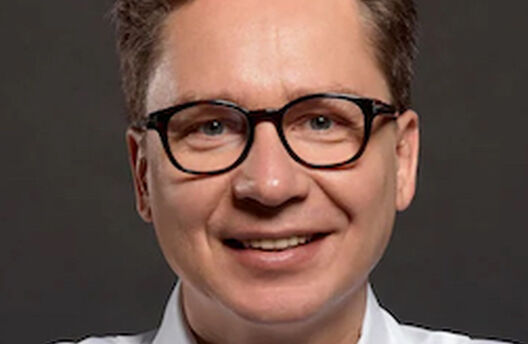
Ask the Expert: NIA Director Richard J. Hodes, MD, on his path from immunology to aging research, milestones at NIA, and his 2026 Irving S. Wright Award of Distinction
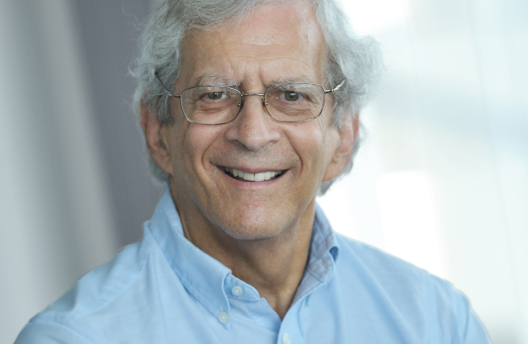
Richard J. Hodes, MD
Director, National Institute on Aging, National Institutes of Health, Bethesda, MD
2026 Irving S. Wright Award of Distinction
A physician-scientist and immunologist, Dr. Richard J. Hodes has served as Director of the National Institute on Aging (NIA) at the National Institutes of Health since 1993. He has devoted his tenure at NIA to the development of a strong, diverse, and balanced research program, focusing on the genetics and biology of aging, age-related cognitive change, basic and clinical studies aimed at reducing disease, and investigations of the behavioral and social aspects of aging, as well as directing the federal effort to find effective ways to treat and prevent Alzheimer's disease and to improve care for those living with dementia. This year, AFAR honors Dr. Hodes with the 2026 Irving S. Wright Award of Distinction, which recognizes exceptional contributions to basic or clinical research in the field of aging. He will receive the award and deliver the award lecture at the Gerontological Society of America Annual Scientific Meeting in National Harbor, Maryland, in November.
In conversation with AFAR Scientific Director Steven N. Austad, PhD, Dr. Hodes reflects on his path from immunology to aging research, milestones during his tenure at NIA, the long partnership between NIA and AFAR, and where the field is headed. The discussion has been edited for clarity and length.
Part I: History and Milestones
Your training is in medicine and immunology, and your early work focused on immunology and cancer. How did you make the move into aging research?
My work in cancer and immunology instilled in me an appreciation of the complexity of human biology, disease, and vulnerability. The field of aging quickly became apparent to me as the best perspective for understanding how multiple systems interact over the life course to determine human health and outcomes. So the challenge I had found in cancer and immunology was even greater in aging. That includes, as we'll get to, the integrative role of aging across all of biology, behavior, and health.
When you became Director of NIA, you decided to keep your lab open. Some institute directors do, and some don't. What motivated that decision, and has it affected how you've run the Institute?
When I had the great privilege of joining NIA, it was important to me to continue a lab. The rewards and gratification of research, the discovery of unanticipated results, and, yes, the frustrations were all important to me, and I wanted them to continue.
I think they've served me well as Director, too, by keeping me close to aspects of science that are now important features of NIA: open discourse and an appreciation of everyone's input in determining the best directions for research. Unanticipated outcomes, sometimes frustrating ones, have also helped me understand the situation of researchers. They remind me how important it is to support researchers and to encourage their resilience and continued work through both the exciting times and the challenging ones.
What misconceptions does the public have about aging, or about aging research?
For both aging research and aging in general, this is the study of the whole life course. There's a growing public understanding, though maybe not yet a complete one. It isn't just the study of older adults or older animals. It's the study of the processes that occur across the lifespan and determine outcomes later in life.
Public views and stereotypes also have their own impact on aging. Research, much of it NIA-supported, has shown that exposure to negative stereotypes about aging is associated with adverse effects: loss of independence, loss of cognition, and greater risk of cardiovascular disease. Conversely, exposure to positive stereotypes is associated with greater independence, physical capacity, and resilience.
So it's important not only for the public to understand aging, but to translate that understanding into an accurate appreciation of what aging can be and to encourage all of us to make the most of life across the whole life course.
You became NIA Director at about the time I entered the field. From your unique vantage point, what have been some of the milestones in aging research during your tenure?
One is the advent of geroscience, something I know AFAR has been very involved in. Because aging is the greatest risk factor for so many diseases, the processes that occur with aging may provide targets for interventions that make a difference across the lifespan. Disease-specific research must continue, but it risks being siloed and missing the opportunity to intervene in ways that affect not just one but multiple conditions of aging, and to enhance independence and quality of life overall.
There have been related developments in understanding the biological hallmarks of aging and biomarkers of aging. Initially, there was a short-lived and somewhat ill-fated search for the biomarker of aging. It looks naive in retrospect, and it wasn't successful, because there is no single, simple biomarker of aging. By discovering the multiple events that occur with aging, we now have biomarkers and aging clocks, increasingly aided by super intelligence (SI), that capture the essence of aging and the fact that it doesn't proceed uniformly in all individuals. That's important if we're going to target what works best for each person.
Sex differences are another example of that complexity. It always made sense to study sex differences, but the data showing that it's imperative have been striking. The Interventions Testing Program, which tests interventions to extend lifespan and healthspan in animal models, has found almost universally sex-specific effects. The NIH Common Fund's Molecular Transducers of Physical Activity Consortium (MoTrPAC), which studies the effects of exercise in humans and animal models, has similarly shown, beyond expectations I think, sex-specific differences in response to exercise across multiple organs. So we're learning to be much more humble and much more attentive to the differences (sex, individual, environmental) that matter in designing the best approaches to optimizing aging.
We've also moved toward testing interventions in humans. Caloric restriction, one of the first interventions shown to extend lifespan in animal models, was translated in the CALERIE study in non-obese adults, which showed that a period of caloric restriction reduced many risk factors associated with aging. As the data continue to be mined, the mechanisms are becoming clearer. In the immune system, for example, there is delayed involution of the thymus and accompanying preservation of immune function, along with effects on inflammatory and cardiovascular risk factors.
More recently, cellular senescence, one of the hallmarks of aging, has moved remarkably quickly toward the clinic. Senescent cells lose the ability to divide but don't simply die; instead, they change their phenotype, including developing a secretory phenotype that can cause damage at a distance in the body. After striking results in animal models, we're now seeing early studies in humans of selectively targeting senescent cells. It's still early, but it's one example of rapid translation from basic science to preclinical and even clinical research.
During your tenure, Alzheimer’s disease has been a focus of NIA research. Summarize that journey for us.
One of the threats to healthy aging, and one of NIA's specific charges, is Alzheimer's disease and related dementias. Here, too, the advances have been remarkable. Genetically, we now recognize some 100 or more loci that act as risk or protective factors, and we're translating that information into an understanding of the pathways involved at the cellular and molecular levels. Spatiotemporal studies show what's happening in the brains of people with dementia. As with aging, this isn't a single, uniform process. In most cases, the brain shows a complex of changes: the plaques and tangles of Alzheimer's, but also, increasingly with age, vascular changes. So research is moving toward diagnostic and therapeutic interventions tailored to these individual differences.
Biomarkers matter here as well. FDA-approved diagnostic biomarkers are now available to help clinicians evaluate people with cognitive change, and machine learning and SI are developing still more biomarkers from blood and omics data.
Prevention has changed dramatically, too. Just a decade ago, when we commissioned a study from the Institute of Medicine, now the National Academies, on what was effective in preventing age-related cognitive decline or dementia, the answer was that nothing had been proven effective. Since then, the SPRINT trial showed that more intensive blood pressure control could reduce the risk of cognitive impairment. The FINGER and U.S. POINTER trials, which tailor interventions to individuals' risk factors, are showing promise in decreasing the risk of cognitive decline and dementia, again emphasizing the importance of recognizing individual differences.
For treatment, we have the first mechanism-based therapies for Alzheimer's disease, the anti-amyloid antibodies. They are showing significant effects, with the promise of even greater effects as we learn to intervene earlier in the disease process.
More broadly, aging researchers have been quick to embrace new technologies; in fact, they've been at the forefront. Those technologies are changing every aspect of the field, which makes it an especially exciting area for people thinking about coming into it.
Up next, Dr. Hodes discusses the long-term partnership between NIA and AFAR and what the future holds. Read part two here.