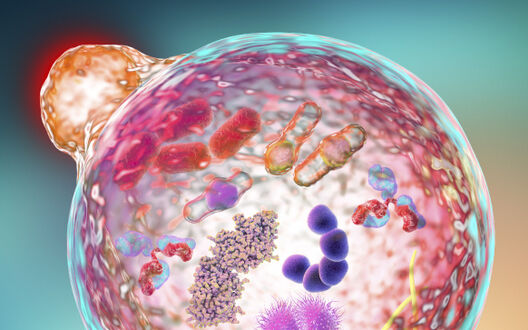
Role of the Prolyl Isomerase Pin1 in the Modulation of PS1 Activity
Proteins regulate the activity, the physiology, and the life of the cell. They exist as three dimensional structures that can undergo changes in their spatial conformation. One could imagine proteins as balls of wool (as it exists in its normal folded state), together with strings that stretch out of it, representing distinct regions of the protein. In the normal maintenance of the cells, the way these strings are oriented in the space (protein conformation) may be changed by other proteins. These conformational changes impact the protein activity, and this results in up-regulation or down-regulation of certain functions crucial to keeping the cell functioning normally. In this project, Dr. Pastorino will investigate how the regulation of protein conformation may be crucial in the development of Alzheimer's disease. Specifically, Dr. Pastorino will investigate whether Pin1, a protein that regulates the spatial conformation of other proteins, modifies the functional activity of presenilin 1, known to be key to the generation of damaging fragments (amyloid peptides) derived from a larger precursor protein. These amyloid peptides are associated with the typical pathology seen in the brains of patients with Alzheimer's disease.