Pinchas (Hassy) Cohen, MD, on his career, mitochondrial discoveries, and aging research in a COVID-19 world.
Professor of Gerontology, Medicine and Biological Sciences; Dean - USC Leonard Davis School of Gerontology
William and Sylvia Kugel Dean’s Chair in Gerontology,
Executive Director - Ethel Percy Andrus Gerontology Center, University of Southern California
Dr. Pinchas (Hassy) Cohen’s discovery of the existence of a new protein-making gene encoded in the human mitochondrial genome, humanin, was groundbreaking for the field of aging research. The discovery of humanin advanced a new research direction on mitochondria and aging and has played a pivotal role in research on diseases of aging like Alzheimer’s, cancer and diabetes.
He has received several prestigious awards for these accomplishments, including the
NIH Director’s Transformative Research Award, the National Institute on Aging’s EUREKA award and the 2017 Glenn Foundation for Medical Research Breakthroughs in Gerontology (BIG) Award. In 2019, AFAR was pleased to present Dr. Cohen with the Irving S. Wright Award of Distinction.
We recently talked with Dr. Cohen, Dean and Professor of USC Leonard School of Gerontology, about the impact of his early career training on his approach to longevity research and the relevance of his findings in today’s world.
How does your early training in pediatrics and endocrinology connect to your career in aging research?
I strongly believe that the secret to understanding aging is having a “developmental” rather than a static approach to the topic. That is why I believe, scientists with a pediatric background who are trained to think of biological processes as continuously changing, have unique insights into the aging process. It is no coincidence, that multiple leaders in our field have transitioned from pediatrics to aging research.
In my own career path, I focused on how growth hormone and growth factors benefit children as geroscientists began recognizing the adverse actions of such hormones on healthy aging. Thus, two decades ago, I was “drafted” into aging biology and began collaborating with some of the leaders in this field (from Nir Barzilai to Valter Longo and many others).
The models, systems, and methodologies we created in the growth hormone - insulin-like growth factor (GH-IGF) arena became extremely useful in studying longevity and allowed us to make seminal observations including the involvement of IGF receptors in longevity, the value of reducing IGF levels through diet, among other examples. Soon, I was applying my endocrine thinking to a whole host of geroscience questions.
You discovered the existence of new protein-making genes encoded in the human mitochondrial genome, like humanin. Please describe the importance of these protein-making genes in diseases of aging.
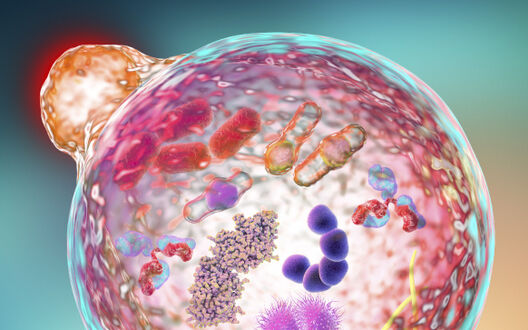
Mitochondria have long been recognized to play an important role in aging and longevity. Many researchers have proposed various ways by which mitochondria can control these processes. Nearly 20 years ago, when we cloned the first micropeptide encoded within the mitochondrial DNA (humanin), I immediately recognized that this will have a profound impact on geroscience.
Since then, we have recognized that small open reading frames hiding as “genes within genes” in the mitochondrial DNA serve as a diverse source of specific regulatory hormonal signals. These mitochondrial-derived peptides (MDPs) appear to regulate many of the key processes of aging. MDPs are reduced in older organisms and improve physiological function when administered to old rodents. Importantly, these peptides represent exciting therapeutic candidates and several of them are in various stages of preclinical and clinical development for diseases of aging.
What do your studies of mitochondrial genetic variants in human populations tell us about the role of socio-cultural and environmental exposures in diseases of aging?
With funding from AFAR, my lab has examined human mito-genetic variation among population groups. Human mitochondrial genetic variation varies substantially by ethnicity, and it is plausible that ethnic-specific mitochondrial DNA variations affect MDPs and, as a result, modify disease risk.
The first MDP, humanin, has been shown to offer possible protection against Alzheimer’s disease. We explored the potential genetic contributions of variations in the humanin region within the mitochondrial DNA on age-related cognitive decline by developing a novel bioinformatic technique that we termed MiWAS or Mitochondrial Wide Association Study (and is a derivation of GWAS – Genome Wide Association Study). We identified an SNP within the humanin gene that leads to lower levels of circulating humanin and predisposes to early dementia. This appears to be a genetic interaction with ethnic and environmental factors.
Recently we identified genetic variants that are found only in Asians that lead to mutations in a second MDP called MOTS-c, rendering it inactive and leading to obesity and abdominal obesity. Remarkably, the genetic effects of this mutation are exacerbated by sedentary lifestyle.
Our lab and several other groups are actively seeking to identify such variation and link them to aging-related diseases and develop novel therapeutic and diagnostic targets. One such case is another MDP (SHLP2) whose levels predict prostate cancer risk and display marked health disparity with African Americans having lower levels that may contribute to their increased risk for the disease.
The COVID-19 pandemic has heightened attention to how the aging process makes older adults more vulnerable to viruses. Has COVID-19 inspired new applications of your research or unearthed new questions that you'd like to explore?
Older adults account for the vast majority of COVID-19 deaths and we have learned that having a chronic disease, like obesity and diabetes, places people at greater risk for severe COVID-19 disease.
In our lab, we are interested in understanding the effects and mechanisms of MDPs on inflammatory biomarkers association with COVID-19. We are also exploring how we might address health sequelae, like lung and brain damage, that reportedly occur in some COVID-19 survivors.
There is also a need to advance our understanding of the gradual decline in the immune system, known as immunosenescence, which is associated with vaccine failure rates in older adults. Mitochondria have been linked to this process. We need to explore additional targeted ways to improve the vaccine response rate, which in the case of the seasonal flu, sits not much above 50 percent for older adults.
Above all, The COVID-19 pandemic underscores the importance of advancing discoveries across geroscience, a field devoted of delaying the onset of age-related diseases by delaying aging processes.