Ask the Expert: AFAR Scholar-in-Residence Raiany Romanni-Klein, PhD, on the Economics and Bioethics of Healthy Aging
Inaugural AFAR Scholar-in-Residence
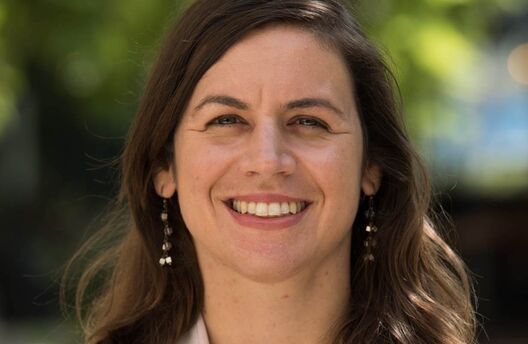
Dr. Romanni-Klein is a researcher and bioethicist with a decade-long focus on human longevity. She has written for publications including The Washington Post and The Boston Globe, and most recently, has worked with a renowned team of economists to simulate returns on investment for specific advancements in aging biology in a new, interactive simulation tool and report, silverlinings.bio. Her book Redesigning Aging: The Ethics and Economics of Human Longevity is under contract with Harvard University Press, and she currently serves as AFAR’s inaugural Scholar-in-Residence.
AFAR spoke with Dr. Romanni-Klein to learn more about her work and where she hopes the field will go next. Her answers were edited for brevity and clarity.
Can you tell us about your journey to research the economics of healthy aging? What sparked your interest?
My background spans ethics, economics, and philosophy, but I have always focused on the very narrow question of how to improve human life. Early on, I learned that people need both the qualitative and the quantitative arguments for why healthy longevity matters. Between my PhD on the Ethics and Economics of Human Longevity and my position at the Amaranth Foundation, I spent years thinking through the moral and economic implications of longevity. My research in economics reminds me that by the year 2029, the US will be spending a full half of its federal budget on adults aged 65 and older. Today, already, some 40 million Americans – predominantly women – are unpaid caregivers of older adults. This led me to the question: Is Gross Domestic Product (GDP) a reliable proxy for human flourishing? GDP growth correlates with most measures of welfare we care about — ranging from lower infant mortality rates to lower greenhouse gas emissions. The wealthiest countries on the planet today are the greenest. So, how do we increase GDP growth? Investing in research in the life sciences – and more narrowly in aging science — is a good starting point.
We also can’t divorce ethics from economics. We live in a world with non-infinite resources, each of which has alternative uses. Thus, we need to ration the scarce resources we do have to do the most good. So I’ve spent much time thinking through what philosophy will guide the best decisions and enable the best outcomes.
Eventually, my arguments and interests evolved to test and quantify the hypothesis that we have a moral and economic imperative to extend healthy lifespan. Because progress —economic, moral, scientific — is both measurable and possible, in my view, it follows that we should quantify and measure this progress.
Of course, big ideas aren’t born in a vacuum, and innovators don’t work in silos. I’ve been fortunate to work with a world-class team of economists, scientists, designers, and philosophers. Economists Jason DeBacker and Richard Evans were my primary co-authors and collaborators, and we’ve deliberately focused on near-term, near-future advancements in aging science.
In this work, we’ve aimed to think through what is plausible in the coming decade rather than what's just exciting. Specifically, I wanted to know: how could tiny advancements in aging biology change the US population and economy? What would be the economic value of making 41 the new 40, or 65 the new 60?
Through this in-depth exploration, what our team has learned over the past few years is that even tiny improvements in how we age would produce outsized returns. Economists Murphy and Topel, from the University of Chicago, estimate that eradicating cancers would add $80 trillion to the US economy. If we consider investments in research on aging, we would be preventing the diseases of aging from ever showing up in the first place. This would benefit everyone in the long term.
In short, we provide evidence that research on aging biology offers vast social returns. Everyone would be better off if we all lived longer and healthier lives, but no individual agent has the incentives to shoulder the costs of investments that would make the science commercially viable. This is what justifies public investments in aging research. Too often, it can be more profitable to extend unhealthy lifespan by two months than to extend healthy lifespan by two years. Thus, public and philanthropic funds are needed.
How has your research added to the literature on the economics of healthy longevity?
To measure the economic benefits of Research and Development (R&D) breakthroughs, researchers often use the methodology Value of a Statistical Life (VSL). Broadly, VSL can be defined as the monetary value society places on reducing mortality risk, estimated from people’s willingness to pay for small changes in risk, aggregated across a population. VSL measures do not measure human productivity. This more abstract valuation of life (whether or not the humans in question are working) is separate from direct growth in GDP. For instance, using VSL, newborn life years can be measured as immediately having economic value, but they don’t add to GDP in the short term.
For the first time, we wanted to respond to the question: what happens to US GDP if we slow biological aging? Our initial work and results will be published soon, including a book with Harvard University Press, a peer-reviewed paper, and an interactive simulation tool.
We used an overlapping generations macroeconomic model (OG-USA–co-developed by economists Jason DeBacker and Richard Evans). The model takes into account newborns’ formal contributions to GDP once they enter the workforce, and once they have newborns who decades later increase labor supply.
Because we use a macroeconomic model, our approach also takes into account how higher fertility rates eventually cause downward pressures on wages. Lastly, our assumption is that in the short term, novel technologies like AI are more likely to increase human productivity than replace it. I tend to think humans won’t evolve into mere observers of progress. We’ll remain the driving force of progress (moral, economic, and scientific). If this assumption is correct, GDP is a great methodology.
Overall, VSL and GDP are both valid methodologies that can be used in different contexts. My goal is to describe how the relationship between economic growth and human flourishing is far from linear. At times, GDP growth can be the result of inhumane causes, like higher but ineffective spending on healthcare. But in the long run, high, ineffective spending on healthcare could lower GDP. This is where ethics and economics make for a welcome pair. It’s on us to figure out ways to humanely and sustainably grow the economy.
To engage audiences with your research, you have created a beautiful interactive report, SilverLinings.bio. Could you tell me a little bit more about the process of designing this and how you hope it will be applied or used?
I was immensely lucky to, first, receive generous support from James Fickel and the Amaranth Foundation, then support by AFAR and The Methuselah Foundation. This support allowed our team to put in countless hours to fine-tune our analysis.
As we prepared to bring our results to the public, I thought to myself: Why make another boring report? How could we make this a truly engaging and inspiring experience?
I knew good storytelling was the answer, and design was an important part of it. I was insanely lucky to work with world- renowned design firm Pentagram and acclaimed information designer Georgia Lupi and her team. The design sensibility I was going after was the scientific sketchbook style of Erns Haeckel, Da Vinci, and Darwin. My keyword was “Vitruvian woman”: I wanted to nod to the idea that progress in aging biology will be something akin to mapping human anatomy, a revolutionary feat. I personally spent hundreds of hours obsessing over each design detail of the experience, and I hope it shows.
For our report, I wanted a character at the center of the story, and the Vitruvian Woman was it. When you open the project, you see her, then you click on individual organs and see the returns on investment for slowing brain aging, reproductive aging, and even the very novel idea of replacing aging. If we could replace thousands of aged kidneys, what effect would this have on the U.S. population and economy? We built a simulation tool to show a range of plausible returns, with different assumptions–ranging from the percentage of the population who would benefit to years until market entry for each R&D innovation to different discount rates.
My hope for SilverLinings.bio to be used to connect scientists to economists, to policy makers to even taxpayers. Scientists can’t be the only group advocating for projects and ideas that will impact everyone.
Are there some overreaching or particular bioethical concerns that fascinate you in the healthy aging space?
I think the biggest bioethical concern I have is that 20 or 30 years will go by, and all we have is more unproven ideas and supplements. Everywhere you look today you see advertisements for programs, medications and supplements that will improve your life. This is because there are large financial incentives to say that things work easily, in some short term. But the science behind so many of these products is minimal, false, or nonexistent. The true answer to most questions in aging science is: we don’t know. And that’s okay. In technically ambitious fields — like climate science — funding often precedes the scientific results we desire. First, we need to establish that a science is morally and economically pressing enough. Then, we can get the results. In longevity, we currently lack both arguments.
How do you see your expertise in bioethics and economics enhancing AFAR's mission to extend the healthy lifespan?
I believe communication has been an undermined lever of progress in aging research and geroscience. Educational outreach can not only inform, but inspire and engage. As more people and organizations become aware of advancements, a larger pool of talent can be a part of the thinking and doing behind different advancements. I hope that our forthcoming interactive tool can be a model for new ways to communicate the momentum and progress in the field.
I also hope we can inspire more bridges between disciplines like economics, ethics, and biology. The future of healthy aging really depends on different sectors collaborating and diverse perspectives. I know how much our book, Redesigning Aging: The Ethics and Economics of Human Longevity, benefitted from interviews with102 longevity scientists: this unearthed a rich map for what R&D areas in aging science remain underfunded but could result in outsized social returns. I’m excited to share all this research and writing soon!
Hear more insights from Dr. Romanni in our recent webinar,"The Potential of Geroscience: from Economic Gains to Social Returns and Ethical Concerns". Watch here.