Ask the Expert: Arlan Richardson, PhD, on the Significance of Mentoring the Next Generation of Aging Researchers
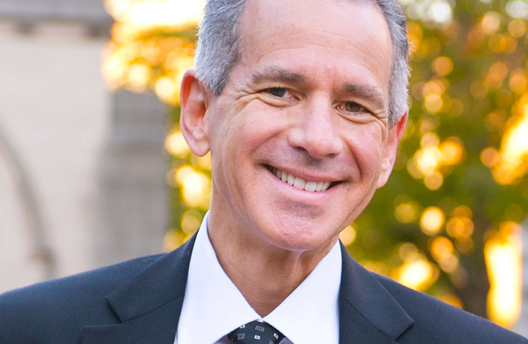
Professor and Donald W. Reynolds Endowed Chair of Aging Research, Biochemistry & Molecular Biology, University of Oklahoma Health Science Center, Senior VA Career Scientist, Oklahoma City VA Medical Center
2025 George M. Martin Award
Dr. Richardson has been a pivotal contributor to aging research for over fifty years. He has mentored and directed the research of more than 75 Ph.D. doctoral students, postdoctoral fellows, and junior faculty and is the author of more than 300 peer-reviewed scientific publications. His focus on the effect of dietary restriction on gene expression has led to multiple research breakthroughs and awards.
Upon receiving the 2025 George M. Martin Award, AFAR spoke with Dr. Richardson to learn more about his career, research, and mentorship model. His answers were edited for brevity and clarity.
What initially sparked your interest in aging research, and what has kept you engaged?
My story may not be exciting, but, put simply, I became interested in the field because I saw it as an area where I could be competitive. I did my postdoc research on protein synthesis, and at that time, there was a dearth of information on how aging affected protein synthesis. So, I was one of the first to explore this area. Studying aging in the 1970s was a little like the Lewis and Clark expedition; I was part of a group of scientists who were studying, for the first time, the mechanism of aging. Every observation was like a new discovery. Like many people, the more I got into the research questions and the more data I produced, the more exciting it got. I fell in love with this field because we were creating something new and something that mattered.
Your work is often cited in discussions about geroscience as a framework for treating aging-related disease. Tell us more about your passion for therapeutic interventions to extend healthspan and what you’re discovering.
When I was new to the field and reporters at the aging meetings asked, “When will we find the cure?” I would respond, “In ten years, we will find something.” I chose ten years because it seemed a short enough time to be optimistic that an intervention would be found, and in ten years, they would forget what I said. In truth, during the 70s and 80s, I believed we could not have a drug or intervention to slow down aging before I retired because aging is such a complex process.
Early on, we looked at how dietary restriction increased lifespan with the goal of finding the pathway responsible for its anti-aging action. The positive effect of caloric restriction on lifespan had been confirmed in multiple animal models. Sadly, we could not find a specific mechanism or target that caloric restriction manipulates because caloric restriction had an impact on most processes that changed with age. The other challenge in caloric restriction is its translatability to humans. Only a small fraction of people who lose weight can keep it off with time. However, the advent of the GLP-1 agonists has been a large step forward in making long-term dietary restriction possible in humans. I am taking one now, and it is amazing how it curbs one’s appetite, making it so much easier to stay on a diet.
In 2009, I was part of a group that showed rapamycin not only increased lifespan but also had an impact on age-related diseases and healthspan. This discovery was critical as it showed for the first time that a pharmaceutical drug could intervene and extend lifespan. In addition, rapamycin increased the lifespan latein life. At that time, everyone believed that to slow down aging, interventions had to occur early in life. A beneficial effect late in life was incredible. Yet, there was reluctance to test this intervention out in humans. I was naïve to the challenges of starting human clinical trials at the time.
You've mentored many scientists across disciplines. What do you think is most essential for building a successful career in geroscience today?
The exciting part of research is working with students and post-docs. One thing you won’t see on my CV is that when I got my PhD, I was burned out with respect to research. I felt I was a good teacher and enjoyed teaching; therefore, I initially focused on teaching, first at Fort Lewis College in Durango, Colorado, and then at Illinois State University. At Illinois State, I had the opportunity to direct the research of MS and PhD graduate students. It was working with these students that pulled me into publishing the data from the students’ research and getting grants to support the students. When I moved to the University of Texas Health Science Center at San Antonio, I started mentoring postdoctoral fellows as well as PhD students. Later, I began mentoring junior faculty to help them get their first grant and set up their independent research.
I was floored and honored when I read the nomination letters sent on my behalf because I never realized how much of an impact I had had on those I mentored. I feel that it is important to encourage students/fellows and to find their individual strengths. Every student/fellow is different, and you cannot use the same approach for everyone. You must identify what their strength is and how you can focus their effort around that strength and grow. For example, I never thought I had a strength in research, and yet here I am.
The George M. Martin Award honors a lifetime of achievement in mentoring. What does this recognition mean to you personally, and what do you hope your legacy will be in aging research?
This award is very special to me because I knew George Martin personally. He was a gentleman and one of the kindest persons in aging research. Equally important, he was a leader in aging and was largely responsible for bringing aging into the era of molecular biology. Thus, to be honored by an award with his name means a lot. Secondly, being recognized for mentoring students, fellows, and junior faculty is special because this was one of the joys of my life, and seeing my former students/fellows achieving success in their future endeavours is special. I hope my legacy will be that my students, fellows, and junior faculty go on to mentor others, leading to the continued growth of aging research.
Where would you like to see aging research be in 5 to 10 years?
I believe that the next major hurdle that aging research faces is taking the interventions we discover in animal models to humans. Human trials will start and advance once we agree on how to measure the impacts of anti-aging interventions in humans without having to do lifespan experiments, as we do in animals. For example, how can you, in the short term, determine if an intervention is likely to be effective in humans? My group is looking into molecular signatures that anti-aging interventions alter in a few months in rats and mice to see if they translate to humans.
In addition, we need to think about how to design animal studies so that they are more relevant to what we see in humans. For example, all the research in rats and mice is conducted in “clean” environments, which eliminate the exposure of the animals to infectious agents and minimize the stress to the animals. In other words, can aging interventions improve lifespan and healthspan in animals housed under conditions that humans experience? As we get better at answering those questions, modelling data will better translate to successful human interventions.