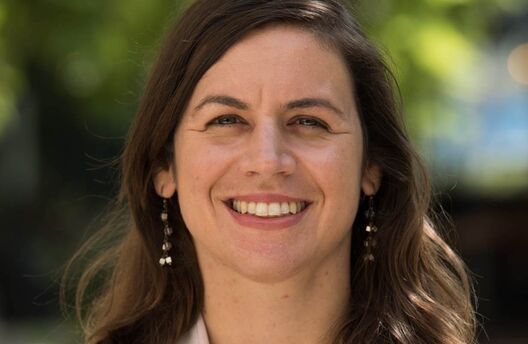
Catherine Kaczorowski, PhD, on Alzheimer’s, Cognitive Resilience, and Translation
Associate Professor, Evnin Family Chair in Alzheimer's Research, and Principal Investigator, The Jackson Laboratory
After winning a New Investigator Award in Alzheimer’s Disease from the American Federation for Aging Research (AFAR) and The Rosalinde and Arthur Gilbert Foundation in 2014, Catherine Kaczorowski, PhD, has received two major research grants from the National Institutes of Health. Most recently, she was awarded a five-year, $5.4 million grant in September 2017 to study why some people with a family history of Alzheimer’s, and even brain changes associated with the disease, manage to maintain their cognitive abilities.
Kaczorowski is the Evnin Family Endowed Chair in Alzheimer’s Research and head of a lab at The Jackson Laboratory in Bar Harbor, Maine, one of the Nathan Shock Centers for Excellence in the Basic Biology of Aging. She is working with a large, diverse mouse population to identify what she calls “biomarkers of resilience” that protect mice—even those with a genetic predisposition to cognitive decline—from developing Alzheimer’s and other neurodegenerative diseases.
Risk and resilience are the terms scientists use to describe the factors that make people susceptible or not to disease. While most Alzheimer’s disease research has focused on risk, Kaczorowski has taken the road less traveled, concentrating instead on identifying the genetic and molecular mechanisms that underlie the regulatory pathways leading to resilience. We recently talked with Kaczorowski about her research and its implications for developing new treatments to prevent and even cure aging-related dementias.
What have you learned about cognitive resilience from your mouse research that seems to have applications to people?
I can give you a really good example. In 2016, I moved my lab to the Jackson Laboratory, where we have a center for biometric analysis and a mouse behavioral phenotyping core—both of which have state-of-the-art technology and staff that can help with phenotyping. Essentially, we’re characterizing memory function, motor function, and metabolic properties over the lifespan of about 6,000 mice right now to do a proper genetic study of this magnitude. One of the things that we’ve discovered, which was predicted from the genetic screen in mice, is a novel heterochromatin binding protein called HB1BP3. The expression (or production) of this protein is higher in mice who show that they’re resilient to age-related cognitive decline. So we think that maintaining or enhancing this heterochromatin binding protein expression is important for promoting cognitive resilience.
To see whether our findings might be translational to people, we obtained post-mortem human brain tissue from the University of Kentucky Alzheimer's Disease Center Tissue Bank and measured the expression of HB1BP3 protein in the hippocampus (the region of the brain that plays a major role in memory and learning.) The tissue we analyzed came from normal aging brains, but half of them were from humans who showed cognitive impairment and the other half were not (i.e. resilient). We found exactly the same thing in humans that we found in mice: If you had lower levels of HB1BP3 protein, your cognitive function at any age and point in time was worse. So that gave us confidence that discoveries in mice can translate directly to humans. That was pretty exciting.
What is the path to translation in humans?
Based on the mouse and human data, we want to upregulate (the process by which a cell increases the quantity of a cellular component, such as a protein) this HB1BP3 gene, we want to increase its expression, and hopefully it will get translated into a protein that would extend cognitive lifespan. The Broad Institute of MIT and Harvard maintains a huge, digital library of compounds and small molecules, some of which are already approved by the U.S. Food and Drug Administration to treat specific diseases. So we did a search for any drugs that increased the expression of HB1BP3. And one of the top molecules that we found was metformin, an FDA-approved, first-line drug used to treat type 2 diabetes for decades. Metformin also is at the center of the TAME (Targeting Aging with Metformin) Trial, which is being led by AFAR Deputy Scientific Director Nir Barzilai, M.D., to test whether it can slow the accumulation of age-related diseases. So one of the very first things I did was talk to Nir about it because if you look at all of the genes that metformin upregulates, this HB1BP3 gene is in the top 100. Now my lab is working to identify the downstream effectors of HP1BP3, as these may also provide novel drug targets for promoting cognitive resilience to aging and Alzheimer’s.
What are the next steps?
It’s funny how things come full circle. When I was in graduate school, a lot of the work I did focused on looking at how neuronal firing, which we refer to as excitability, is altered as a consequence of aging well versus aging poorly. We looked at neuronal changes in an aging population of mice, and then I would stratify them based on whether they were still performing well, like young mice, or if they were performing poorly, like what you would expect from an older mouse. I was trying to figure out the mechanism at the level of neuronal firing responsible for what might be going wrong in mice that were susceptible to cognitive decline and Alzheimer’s disease. And we did find these really elegant neuronal signatures that looked like they were strongly correlated with whether you were resilient or susceptible. But mechanistically, we didn’t understand what the molecular mediators were.
Today, we know that when we manipulate HB1BP3 gene expression, it also changes neuronal firing—exactly like how I found that signature in graduate school. We’re trying to figure out the ion channels and receptors that are ultimately regulated by this gene, which can be targeted by drugs a lot easier than trying to get into the cell and regulate a nuclear protein. Right now, that’s something my lab is really, really focused on, to try to figure out what downstream molecules are changing that HB1BP3 normally controls. Because we might be able to just upregulate those and not have to go in and mess with the nucleus at all.
Hopefully, metformin works for everybody when the TAME Trial gets underway. But I think understanding how HB1BP3 is acting directly on neurons and coming up with some alternative therapeutics is going to be really, really important, especially while we’re waiting to see how the TAME trial does. So I’m very optimistic about the TAME trial, but I think we can’t stop looking for new targets in the meantime.
This article also appears on NextAvenue.org as part of an editorial partnership between AFAR and Next Avenue, public media’s first and only national journalism service for America’s booming 50+ population, delivering vital ideas, context and perspectives on issues that matter most as we age.
Ask the Expert: Mehmood Khan, MD, on Technologies, Bottlenecks, and Possibilities in Aging Research
March 23, 2026
AFAR is pleased to share Part II of our Ask the Expert interview series featuring Mehmood Khan, MD, Chief Executive Officer of the HevolutionFoundation.
Ask the Expert: Mehmood Khan, MD, on Hevolution Foundation’s Inspiration and Vision for Healthy Aging
February 24, 2026
AFAR is pleased to share Part I of our Ask the Expert interview series featuring Mehmood Khan, MD, Chief Executive Officer of the HevolutionFoundation.
Ask the Expert: AFAR Scholar-in-Residence Raiany Romanni-Klein, PhD, on the Economics and Bioethics of Healthy Aging
January 27, 2026
AFAR is pleased to share our Ask the Expert interview with our inaugural Scholar-in-Residence Raiany Romanni-Klein, PhD, on the Economics and Bioethics of Healthy Aging.
Ask the Expert: Lauren Hunt, PhD, RN, FNP, on a Multidisciplinary Approach to Health Services Research into Geriatric Palliative Care Needs and her 2025 Terrie Fox Wetle Rising Star Award
November 4, 2025
Dr. Lauren Hunt is a doctorate-trained nurse practitioner whose research has focused on understanding geriatric palliative care needs. Her
Ask the Expert Interview: AFAR Board Member Sara Espinoza, MD, MSc, on Translational Geroscience, Promising Therapeutics, and More
September 8, 2025
AFAR is pleased to share our Ask the Expert interview with board member Sara Espinoza, MD, MSc, Director of the Center for Translational Geroscience at Cedars-Sinai.