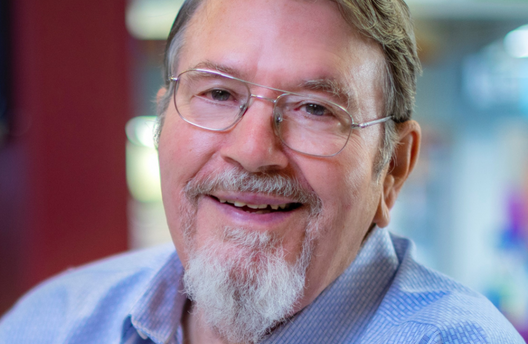
Ask the Expert: Steven N. Austad, PhD, on the importance of mentorship and his 2024 George M. Martin Award
AFAR Scientific Director; Protective Life Endowed Chair in Healthy Aging Research and Distinguished Professor of Biology, University of Alabama at Birmingham
2024 AFAR George M. Martin Lifetime Achievement in Mentoring Award
Winner of AFAR’s Irving S. Wright Award of Distinction 13 years ago, Dr. Austad’s prominence as an aging biologist has been amply demonstrated. His wide-ranging research, which has won an array of awards, uses both laboratory and field studies to search for underlying causes of aging that might be slowed with clinical interventions. He has written or edited seven books and more than 200 scientific papers and book chapters on almost every aspect of biological aging. Dr. Austad has also been dedicated to connecting the public to aging science, penning a newspaper column, planning museum exhibits, and writing his most recent book, Methuselah's Zoo: What nature can teach us about living longer, healthier lives (MIT Press, 2002).
Dr. Austad co-directs UAB’s Nathan Shock Center of Excellence in the Basic Biology of Aging and co-directs the school’s Integrative Center for Aging Research. He also serves as Co-Investigator of the Nathan Shock Centers Coordinating Center (NSC3).And for the past decade, he has been AFAR’s senior scientific director or scientific director, a post previously held by the namesake of the George M. Martin Lifetime Achievement in Mentoring Award.
As the inaugural recipient of this award, Dr. Austad talked with AFAR about his research and career path. His answers were edited for brevity and clarity.
Your career trajectory is really unusual. Tell us about how it led you to study the biology of aging and helping others develop along the same career path.
After graduating from UCLA in 1969 with an English literature degree, I worked as a newspaper reporter for a bit, then hitchhiked to New York and drove a taxi thinking that would give me material for a novel. Then I met a guy who asked for my help driving a lion to Los Angeles to be in a movie. That led to three years of me in Hollywood training lions and tigers for movies and TV. And that awakened my interest in biology, so I went back to school and got another bachelor’s degree.
Then I went to graduate school with the aim of studying lions in the wild, since I knew so much about them in captivity. That didn't work out. I went to Africa, but it turned out the project I wanted to get involved in had been taken over by somebody else. So, I did my PhD on something totally unrelated, testing game theory models of animal combat behavior. Then, as a postdoc, I was doing a project on opossums and, by accident, discovered they didn't live any longer than mice. And that shocked me and puzzled me, and it got me thinking about, "Well, why do some animals live a long time, and some animals live a short time, and some fall apart almost overnight and some take decades?" And that really got me interested in aging.
Prior to that, any time that I felt like I had something pretty well figured out, I'd lose interest in it, so I'd sort of hop from topic to topic. But this has really kept my interest for 40 years because I'm still learning new things and still think there's a ton to learn.
Your passion for lifelong learning is inspiring. What are you trying to learn now?
I’m rethinking how we test new drugs in laboratory animals. We have all these drugs now that make mice live longer, which is great. But our success in translating disease therapies from mice to humans is very low – like a 19 out of 20 fail rate. I think that’s because our approach is too similar to what we have used to discover the molecular details of aging, and it’s not suited to see how well drugs might translate to people.
Even if we could cut the failure rate to 50 percent, that would be a huge advance. I’m testing the benefits of putting rats in more naturalistic circumstances rather than in a shoebox in a laboratory with constant temperature, constant light, constant food, complete separation from any microbial environment. We know that if you put a genetic disease that humans get into a lab mouse, and all you do is put a few toys in the box, it may take that mouse twice as long to get the disease, and the disease may progress more slowly. But most researchers are doing molecular work and don't think about the environment their animals are in. I say you can't separate those two things.
I’m using rats because they respond more like humans than mice do. And it's not just any old rat, but rats with a specific design and they're not all inbred. A lot of people study totally inbred mice, which is like studying the same pair of twins over and over. I think it’s important to introduce this genetic variability, which other people are doing. But nobody's really tinkering with the laboratory environment in the same way that I think it needs to be done. Here’s just a couple of examples. If you take old, inbred, standard-laboratory-issue mice and you put them in a cage that previously had healthy pet store mice in, the lab mice all die in a few weeks because they’ve never had any normal germ exposure. We need to figure out how to give them that. And also make temperatures and daytime length, which changes everything in our physiology, more like the real world instead of just mimicking night by flicking the lights off.
You explain things very clearly, which can be one characteristic of a good mentor. And most good mentors had good mentors. Did you have one?
I had two. The ecologist Peter Waser at Purdue, where I did my doctorate, had a gift for very close listening and very seriously considering any strange idea. I chose him because he knew Africa, which is where I thought my research would be. I ended up working on something completely independent from him, but he gave me so much really good advice about the problems I might have as well as ways to think about solving the problems.
Then I did a postdoc at the University of New Mexico with the evolutionary biologist Randy Thornhill. What made him an excellent mentor is that he didn't mind if I disagreed with him, which was important because I was not a not a traditional graduate student. I was older than most and had spent time training lions and driving taxis and all, and I spoke my mind. While I assumed my mentor knew more than I did, I had my own thoughts and wanted them to be taken seriously. And, fortunately, when I disagreed with him, it started a useful conversation.
How did your mentors shape your own approach to mentorship?
What they both did was give me the idea that your job as a mentor is to let people think and maybe guide their thinking, but not tell them what to think. It’s important for me to listen to them very carefully and try to help them with their own thinking. I've always been very laissez-faire. I'm going to let you make your own mistakes, and then I'll try to help you figure things out. And that has led to some of the most satisfying moments of my career — when somebody tells me, “What you said to me 15 years ago when I was just starting out really had a huge impact on me.”
For about 10 summers I co-directed a course on the molecular biology of aging with Gary Ruvkun of Harvard, who just won a Nobel Prize I might add. It was intense and immersive at Woods Hole on Cape Cod, with about 20 scientists ranging from graduate students to fairly new assistant professors. As a lot of them advanced in their careers, they would periodically call me up and say "I'm at this kind of crossroads. What should I do?” And I would never really give them very solid advice. I would just sort of think about it out loud and hope that they got something useful out of that.
I just think that if you are mentoring creative people, you let them be creative. You're not too heavy-handed. And that gives people a lot of self-confidence. And self-confidence in most things is good, right, as long as it's not overconfidence. But self-confidence usually improves performance.
The end result is my mentees are scattered everywhere, sometimes in completely unrelated fields. One of my best graduate students is a wildlife photographer. But I took a lot of students who weren't doing aging research and now they are, all over — Harvard, Michigan State, UCLA, a number of the Cal State universities.
Have any of the scientists you have mentored ever turned out to be professional rivals?
It happens more often than it should, and it shouldn't happen because science should be a collaborative enterprise. I've always thought of it that way. Doing it the other way is really bad for science. You want multiple people working on similar things because we don't really believe anything until several people discover the same thing. And so, my graduate students, if they decide to leave and have been working on a project, I tell them, “Take it and do whatever you want with it. I don't need it." It was nice when I got to the point in my career when I could be that generous, I guess.
Do you think you'll still be mentoring new talent in the field and working on aging biology in a decade?
There’s a continuing flow of new insight and new information that keeps the field very dynamic. I used to ask, when I interviewed somebody for a job, “Where do you see yourself in 10 years?” And if they could tell me that, they did not do well in that interview from my perspective. I’d tell them, “If I knew what I was going to be doing in 10 years, why would I spend my time doing it?”
But I can't really envision what life without doing science is like. I'm healthy at the age of 77, and I love what I do, and I think that that’s keeping me young.