Ask the Expert Interview: AFAR Board Member Sara Espinoza, MD, MSc, on Translational Geroscience, Promising Therapeutics, and More
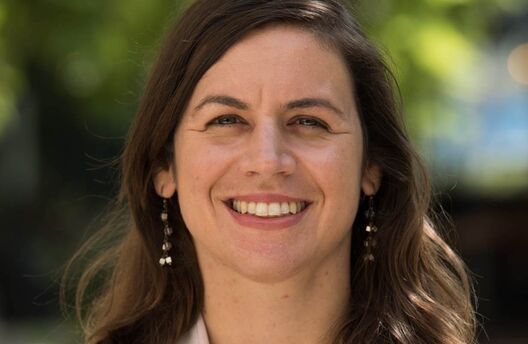
Sara Espinoza, MD, MSc
Director of the Cedars-Sinai Center for Translational Geroscience, Los Angeles, CA
Sara Espinoza, MD, MSc, is a physician-scientist whose work bridges geriatrics, internal medicine, and health services research. Her research focuses on frailty, aging biomarkers, and interventions to promote resilience in older adults. She is a long-time advocate for equitable care for aging populations and has led multiple initiatives to improve clinical outcomes in underserved communities. Dr. Espinoza is an AFAR Board Member, a member of the Advisory Committee of the Paul B. Beeson Emerging Leaders Career Development Award in Aging Program, and the Co-Chair of the Leadership Core of the Clin-STAR initiative. AFAR spoke with Dr. Espinoza to learn more about her work and goals. Her answers were edited for brevity and clarity.
What event or experience first drew you to focus on aging research?
I became a geriatrician because I was drawn to the challenge of treating patients with extra complexity. Older adults who have multi-morbidity or polypharmacy issues require specialized and optimized care. I wanted to know how care can be optimized to improve the function and reduce frailty. Frailty has been my main research interest since I was a fellow at Johns Hopkins University. My attending physician and research mentor, Dr. Jeremy D. Walston, was inspiring, and I remember meeting with him and reviewing his recent publication on frailty. It was exciting to discover what the biologic underpinning was to the frail phenotype. I was honored to work with him and identify interventions that may improve the lives of this vulnerable population.
I have always been drawn to translational research. By understanding the biological mechanisms, you can better understand the physiology and improve the clinical experience. I had no lab experience prior to my work with Dr. Walston, so his leadership and guidance began my path. After the fellowship, I sought a faculty position that would allow me to continue to work as a physician-researcher.
How do you define frailty and why is it such an important clinical concept in aging research?
Frailty is a geriatric syndrome, and it is clinically recognizable. As a resident, I could see a patient and know they are “frail,” and I knew that would complicate their clinical course. The definition of frailty has evolved over the years. With time, my thoughts on frailty have evolved as well. There are now multiple assessments and tools available, and this is necessary so that the specific situation is addressed. We must be practical as physicians and make sure we use the best tool for the specific patient. Understanding the type of frailty and the risk it introduces means we have to first understand the goals. The definition and assessment of frailty is different than using frailty as an outcome. By speaking with the patient, you must first ascertain their goal, then we can understand how frailty will impact their course.
Could you explain the term "gerotherapeutics" and how it applies to your research and goals?
In short, it is a treatment that is focused on improving or maintaining healthy aging by targeting mechanisms of aging. I have also heard others refer to those therapies as “geroprotectors.” The field of aging research has evolved very rapidly in the last 20 years. Initially, the idea of “geroscience” and “gerotherapeutics” did not exist. We were focused on understanding the mechanisms and theories of aging. Major discoveries of interventions, such as rapamycin extending life in rodents, spawned a whole new avenue of research via pharmaceutical interventions.
During my time at San Antonio, observational studies found links between frailty and obesity and diabetes. Well over half of my patients had diabetes, so we explored the overlap between diabetes and frailty. Insulin resistance is a major predictor of frailty, so that inspired the exploration of interventions, like metformin, that can target insulin resistance as well as other hallmarks of aging. We just completed a randomized clinical trial of metformin for frailty prevention in older adults with prediabetes. We are also examining the effects of metformin on several hallmarks of aging and biomarkers of Alzheimer’s disease.
Today, we are working on the geroscience hypothesis -- hallmarks of aging underly diseases of aging and geriatric syndromes, including frailty. If we can modulate those hallmarks through interventions (medications or lifestyle), we could potentially extend the healthy lifespan or healthspan. We are just the beginning of this exciting avenue of research.
What are some of the challenges facing your research?
The field in general faces a communication issue. Sadly, aging or geriatrics is not always an “appealing” term to the public. Thus, it can be hard to find financial and institutional support for research efforts. However, in the last 10 years, as our population has grown older, there has been more interest. In particular, the term “longevity” has been a focus of many efforts as people want to live longer. The interest is good as the public has become more aware of the recent research discoveries. At the same time, that desire to live longer has led to the creation of potentially predatory services offered to the public that take findings out of context or offer therapies or treatments that are not proven to be clinically meaningful. This practice leads to confusion and erodes the public trust. Thus, as a field, we must work hard on clear messaging that builds trust and understanding. These efforts require funding and time. There has never been a moment when we needed more resources to ensure older adults receive the credible, evidence-based care they need.
Where do you hope your research will be in ten years, and how will it help us all live healthier and longer?
I would like to see more interventional trials in humans. Several smaller pilot/phase I trials have been completed to provide the critical real-world evidence in the older adult population, but we need larger, phase III clinical trials to determine the impact gerotherapeutics may have. I am hopeful that in 10 years these trials will provide initial evidence to guide the clinical care of older adults in order to provide individualized treatment recommendations to improve healthspan.