Sean X. Leng, MD, PhD, on COVID-19 and the Promise of Geroscience
Professor of Medicine, Johns Hopkins University
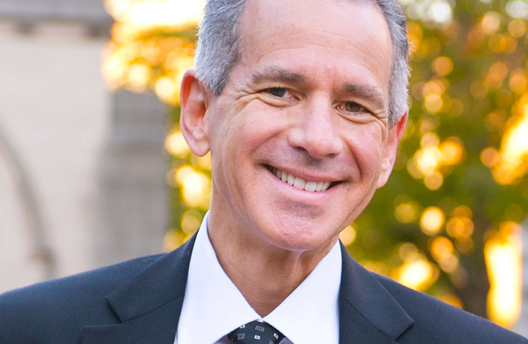
Sean X. Leng, MD, PhD, and his laboratory team at Johns Hopkins University School of Medicine study the biology of healthy aging with a focus on chronic inflammation in late-life decline. The lab also studies immunosenescence—the decline in immune function as we age—and its relationship to the basic biological and physiological changes related to aging and frailty in the human immune system. Through this, his lab is honing in on elucidating longitudinal trajectories, influenza immunization, and chronic cytomegalovirus (CMV) infection.
In a 2014 paper, Leng—a 2006 Paul B. Beeson Emerging Leaders Career Development Award in Aging recipient—described frailty as “a common and important geriatric syndrome characterized by age-associated declines in physiologic reserve and function across multiorgan systems, leading to increased vulnerability for adverse health outcomes.”
A professor of medicine, molecular microbiology and immunology, and board-certified geriatrician at Johns Hopkins, Leng is also president of the Milstein Medical Asian American Partnership Foundation, which works to improve world health by developing mutually beneficial partnerships between the U.S. and China, as well as greater Asia.
We recently talked with Leng about the role of immunosenescence in the COVID-19 pandemic, and how a geroscience approach can help address the problem.
As a researcher in the field of aging research who has studied viral infections and immune function, what have we learned from the COVID-19 pandemic about how it effects older adults?
The thing that’s most pertinent to aging and gerontologists is that older adults are at the greatest risk of hospitalization, winding up in the intensive care unit, and death from COVID-19. The case fatality rate is far higher among older adults than among the young and middle-aged. When you look at the data from China through Feb. 11, for those in their 80s and older, the case fatality rate is 14.8 percent, compared to basically zero among children under the age of 10. In Italy, as of March 17, the case fatality rate for those over age 80 was 20.2 percent, compared to zero for those age 29 and younger. It should be noted that older adults account for a much higher proportion of Italy’s population (22.8 percent) than in China (11.9 percent). This may explain why Italy has a much higher overall case fatality rate than China.
And in the United States, according to the Centers for Disease Control and Prevention (CDC), as of March 18, 45 percent of hospitalizations, 53 percent of ICU admissions, and 80 percent of deaths associated with COVID-19 were among adults age 65 and older. And the highest percentage was among those age 85 and older. Clearly, older adults are the ones most vulnerable to COVID-19.
What role does decline in immune function as we age, known as immunosenescence, play in making aging the greatest risk factor for severe COVID-19 and deaths?
I think there are two points in terms of older adults’ vulnerability to the severe disease. One is that our overall immune defense decreases as we age. To put it in simple terms, because of the decline in immune function, if even one viral particle gets into the airways of an older adult, it may be enough for the virus to survive and grow there because of the decline in immune function. For younger individuals, if you have a very strong immune system, the body may be able to kill that virus even if more particles get in.
The other aspect is what we call immune dysregulation. Some of the initial research shows that the virus can actually stimulate the airway to produce what’s known as a cytokine storm. Cytokines are small protein molecules, or peptides, that play an important role both in the acute inflammatory response and also in the immune response. Because the immune system, like other systems in our bodies, is highly regulated, the production of excess cytokines can cause tissue damage. It’s an overreaction to the virus. As in the pathogenesis of sepsis, cytokine storm in some cases can lead to hypotension, circulation collapse, and multiorgan failure.
In China, one of the key indicators for severe COVID-19 cases in the ICU was when patients developed what we call lymphopenia—a dangerously low level of lymphocytes in the blood—between four and six days after disease onset. Lymphocytes are white blood cells that include T cells and B cells, which are critical immune cells. So they found the virus killed both CD4 and CD8 cells, which are the two major categories of T cells. Those severe cases where patients developed lymphopenia in day four to six resulted in very poor outcomes. Most of these patients died from COVID-19.
So the virus is kind of a double whammy for older adults. When you think about it, older adults have a weaker immune system to start with so it’s easier for the virus to get in and grow there. And then when this virus starts to kill those remaining immune cells, it will make outcomes for older adults even worse.
You’ve said that some of your colleagues on the front lines of the pandemic refer to COVID-19 as SARS plus HIV. What do they mean by that?
Some of my friends in China have experience dealing with SARS, and they think COVID-19 is worse. They say it’s like SARS plus HIV. It’s actually worse than HIV, because HIV only kills CD4 T cells. But this thing kills both CD4 and CD8 T cells.
Why is the geroscience approach necessary to lessen the severity of viruses including COVID-19 in older adults?
Geroscienceaddresses resiliency and the ability of older adults to fight infections and other diseases by targeting the underlying biology of aging, rather than just a specific pathogen. Even within the coronavirus family, we had SARS, we had MERS, and now we have COVID-19. So going after specific individual pathogens, which is the traditional paradigm, won’t work. The key issue is really how can we help increase the immune function of older adults, which will help to limit the severity of the disease.
Even if we develop the best vaccine—the most potent vaccine—in the world, if a person, particularly an older adult, does not respond well or is not able to mount a good immune response, then it really doesn’t matter. Instead of focusing only on the virus, we really need to focus on the host, on older adults. It’s obvious. If an older adult’s immune system is not working well, no matter what vaccine you give, it’s not going to be able to mount a good immune protection.
Related Webinar: COVID-19: Can the Science of Aging Move us Forward?
For more of Dr. Leng's insights on the unique impact of COVID-19 on older adults globally, and for additional expert perspectives on promising geroprotectors that target age-related disease by targeting the biology of aging, check out AFAR's recent webinar, "COVID-19: Can the Science of Aging move us Forward?" Watch presenter clips here.