Ask the Expert: San Antonio Nathan Shock Center Deputy Director Adam B. Salmon, PhD, discusses the center’s integrated approach to study the biology of aging
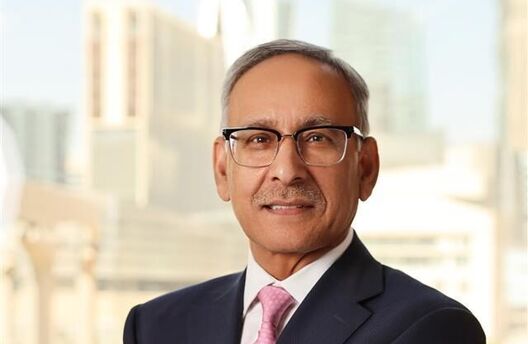
Adam B. Salmon, PhD
San Antonio Nathan Shock Center, Deputy Director
There are eight Nathan Shock Centers in the Biology of Aging across the country, funded by the National Institute of Aging (NIA) of the National Institutes of Health (NIH). The centers provide leadership in the pursuit of basic research into the biology of aging. Each center brings unique expertise under the leadership of respected experts in the field. AFAR, which manages the Nathan Shock Centers of Excellence in the Biology of Aging Coordinating Center (NSC3) (U24AG056053), will highlight the work of these centers through this series*.
Dr. Salmon came to the Barshop Institute as a postdoctoral fellow in 2007. At that time, it was one of the only centers focused on the biology of aging. He has served as Associate Director since 2023.
Describe the Cores at the San Antonio Nathan Shock Center and how they uniquely contribute to the mission of the Shock Centers.
With the San Antonio Shock Center, we have a horizontally integrated approach to understand the biology of aging and to define therapeutic mechanisms to target aging. The Pharmacology and Drug Design Core helps investigators measure compounds in mammalian models and identify and develop the next generation of compounds that target aging. In our Aging Animals and Functional Assessment Core, we administer those compounds, draw samples and tissues, and perform lifespan studies in mammalian models. Our GeroMetabolism Core to look at functional metabolic effects of both aging and interventions at the molecular, tissue and functional level and can conduct metabolomics and lipidomics with big data sets and look at metabolic function in the animals themselves. We also have a Pathology Core to analyze pathological outcomes of age and interventions as well as use approaches to understand mechanisms of pathology. Our Research Development Core supports projects and investigators and our Leadership and Administrative Core supports the Center overall, and provides dissemination of findings from our research support.
Our Center focuses on mammalian models. We have three main animal models: (1) the traditional rodents—mice and rats—including normally aging animals and genetically modified animals; (2) nonhuman primates—the marmoset—that we can start bridging preclinical translation from mouse models to something more similar to humans; and (3) rodents of exceptional longevity—naked mole rats and Damaraland mole rats—which are relevant to delineating biological mechanisms of long life because they are related to mice but have evolved to live 10 times longer.
Regarding animal models, how do you see these translating to human aging?
All models are useful, but mice and humans age really differently in many ways. Nonhuman primates age and are phenotypically similar to humans in ways that aren’t there for rodent models. About seven years ago, I started working with marmosets. These New World monkeys are relatively short lived compared to other nonhuman primates. The maximum lifespan is about 20 years, but the average is more like 8 to 10. We’ve been transitioning the findings on biology of aging and targeted interventions discovered in mice mice to these nonhuman primates. For example, if a drug extends life in mice, it might be eliminating or reducing one particular disease that mice die of, such as cancer. But nonhuman primates die of a spectrum of diseases—not just cancer—very similar to us. So if we can extend lifespan in this species or improve health in different ways, it helps us both understand the general science of aging and offer potential translatability of these agents.
How did aging research become an interest for you?
It’s one of those big picture questions. Why do we age? Most people can understand what it looks like to age and what the consequences are. But the question of why persists. You read the lay press that says “We’re this close to solving aging.” I would say that the field is still far from understanding aging. We know little bits and we can do certain things, but I don’t think we understand what’s really going on at a big picture level. That’s the high point for me. Aging is a complex question. I don’t think there’s an easy answer. It involves input from lots of people. It won’t be just my lab finding this gene or this protein and that’s the end of the story. It’s not. It’s one piece of a larger question.
What are the biggest obstacles facing your work at the moment?
Thinking about the research in the context of what we actually want to do. As basic science researchers, we always say we want to improve human health, but I’m not a clinician. I only vaguely know what these approaches would do. Discussion on how translation to clinical trials would happen if our basic research is positive should occur early on in development of these approaches. If I’m pursuing the path of developing a drug and a clinician tells me there’s no way you would ever give that to a person, it doesn’t seem like it’s a promising path to go down. That’s important to know early on in the discovery process.
What are the types of diseases or conditions that are being looked at with your translational partners?
Our center focuses mostly on function and functionality. Things like frailty, muscle function, exercise late in life—but not necessarily a specific disease. At the Barshop Institute, we have a Claude D. Pepper Older Americans Independence Center which is supported by our clinical translational unit led by Elena Volpi, MD, PhD, the Director of the Barshop Institute. Here, the Shock Center works with other groups, like the Pepper Center, to address the spectrum of basic science to translational research in geroscience. We do have investigators looking at things like Alzheimer disease, cardiovascular disease, and kidney function, so we cover the whole spectrum of disease and pathology. But function and functionality are really underrepresented in the current way of thinking about aging and need to be addressed as well. The big diseases that have a name are one thing, but lack of function doesn’t mean you have a disease. It means you can’t do things like get up and move around your house. Improving day-to-day functioning would really shift how a person ages.
Where do you think the field of aging research is moving or what do you think are the most promising developments?
When someone goes to their doctor and says “I’m getting frail” or “I just feel old,” we could implement a plan that could actually help people either slow that down or potentially rejuvenate some of those effects. I don’t have a specific intervention in mind. All the current approaches we use in animal models have potential downfalls. But there’s always going to be new discoveries, and something new where we’ve discovered something fundamental part of aging or that this compound or this drug can help. I’m hopeful about what we’re learning.
Because the Barshop Institute has had a Shock Center for so long, how has this affected the field of aging research overall?
Our Shock Center has a long history of not only helping define new understandings in aging research, but also focusing on developing new independent investigators as well as senior investigators interested in transitioning to or complementing aging research. A significant number of investigators at other Shock Centers trained here at the San Antonio Shock Center at some point in their career. We would like to take some credit for that—not all of it— and we would like to continue that legacy of pushing both the research and researchers in geroscience forward.
*The content is solely the responsibility of the authors and does not necessarily represent the official views of the National Institutes of Health.