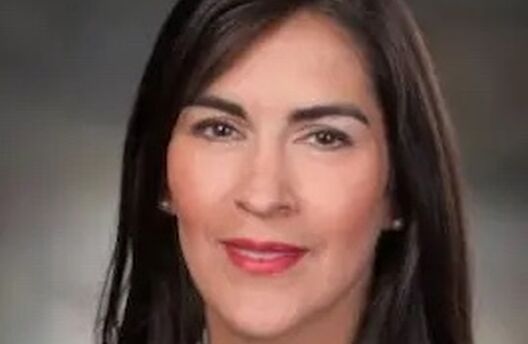
Ask the Expert: Lauren Hunt, PhD, RN, FNP, on a Multidisciplinary Approach to Health Services Research into Geriatric Palliative Care Needs and her 2025 Terrie Fox Wetle Rising Star Award
Associate Professor, Philip R. Lee Institute for Health Policy Studies, University of California, San Francisco
2025 Terrie Fox Wetle Rising Star Award
Dr. Lauren Hunt is a doctorate-trained nurse practitioner whose research has focused on understanding geriatric palliative care needs. Her methodological expertise has enabled her team to harness “big data” from Medicare claims to explore geriatric palliative care needs across settings. She employs a multidisciplinary approach to health services research that investigates the intersection of dementia, palliative care, and public health. Her findings will shape palliative care and policy for years to come.
Dr. Hunt is this year’s Terrie Fox Wetle Rising Star Award in Health Services and Aging Research recipient. AFAR talked with Dr. Hunt to gain insight into her work and her future goals. Her answers were edited for brevity and clarity.
What inspired you to focus on geriatric palliative care?
My interest started during my first clinical role as a nurse on a surgical unit, where I was taking care of a lot of older patients. I identified early that care in the acute care setting was not meeting the unique needs of older adults. I also felt the end-of-life care and conversations were not aligned with the goals and needs of the patients and families. Invasive treatments were being performed, but those treatments did not promote their comfort. I felt in many cases, the patients did not fully understand the choices, and I saw a lot of suffering that could have been avoided.
After that experience, I became very interested in hospice care. I saw its model as an alternative that promoted patient comfort and aligning care with the goals and values of patients and their families. I left acute care and worked as a hospice nurse for a number of years. In this setting, the quality of care was high and holistic. We provided care to the whole family unit, and there was specific support for the caregivers. Yet, even in this model, there was room for improvement. The historic hospice model was designed around patients with cancer care or HIV, and those patients were younger.
There was a mismatch between the hospice model and the needs of older patients. The frailty, multi-morbidities, and dementia that are often seen in older adults can really impact the end-of-life needs for care. This spurred me to pursue my doctorate, and I chose a research group that focused on care across a spectrum of settings (acute, hospice, home-based, etc.) I continue to be dedicated to understanding how aging and settings impact care needs and outcomes.
Why did you decide to bring a multidisciplinary approach to your research goals?
As a nurse, our philosophy is really grounded in being present with patients and building connections. We are on the front lines with patients, and when you're in that position, you become very connected with patients and their families. Because nurses have such a close vantage point into what patients are really experiencing, we are often able to deduce what they really need. Bringing in the nursing perspective is incredibly important to research. Nurses are at the bedside, often collecting the data. By incorporating nursing observations with multidisciplinary care, we get a better answer and outcome.
In hospice, we have a multidisciplinary approach to patient care. The model includes nursing, social work, spiritual care, medicine, psychiatry, and, in some cases, rehabilitative care. All of those perspectives are needed to meet the goals of the patient and their families. By working with others, the combined expertise allows for a richness and depth of care as well as nuanced options for the individual patient's needs.
Likewise, in research, multidisciplinary expertise is needed to identify the best protocols and polices for older adult care. I work with sociologists, statisticians, epidemiologists, clinical physicians, and health policy experts to ensure we are synthesizing those perspectives and developing studies and theories that are more encompassing. The different training and methodological backgrounds can bring new insights and new systems to methods and outcomes. Problems and challenges can be approached in new ways, and the results and conclusions are more rapidly disseminated and accepted by the different stakeholder when their expertise has been incorporated early.
Tell us more about how you analyze big data sets and apply those results to better understand geriatric needs, and any unique technologies or tools you utilize.
I use several large data sets. Many are developed from nationally representative surveys, like the Health and Retirement Study and the National Health and Aging Trends study. These large studies include thousands of individuals and were designed to be representative of everybody in the United States. The data has quite a bit of depth and insight into personal experiences, and the data can be linked to administrative data through Medicaid and Medicare claims. We have been able to identify characteristics that are vulnerable to certain bad or good outcomes. We can also understand service use patterns.
However, even with large datasets, we can still get into sample size issues. If the population we want to study is not well represented in the data, we cannot perform rigorous analysis. So, I started shifting over to using Medicare data, which includes data on the health services use of millions of people, which provides the larger sample sizes we need. Admittedly, it was arduous to get access to the data, which requires a long application process to ensure the ethics and security of our research methods, but it has been worth it. Support from my NIH K award enabled me to initiate the process and gain access. We are now able to study medications, types of visits, and their links to demographics and outcomes. The Medicare data also allows us to examine national variation and state policy interventions, and outcomes. Recently, we have been looking at how organizational behaviors affect outcomes. The complexity of the data means I work with really strong biostatisticians.
What is especially meaningful to you about winning the Terrie Fox Wetle Rising Star Award?
Terrie Fox Wetle was the champion of multidisciplinary research. I appreciate AFAR placing value on such approaches, and this sentiment truly aligns with my values. I was honored to be selected to represent those ideals. It’s always lovely to be recognized by one’s peers and inspiring to keep going in my research efforts. I am very grateful to the folks who nominated me, whom I hold in high regard. I am in awe of joining a long line of amazing researchers, and I aspire to live up to their example.
How can we better bridge the areas of clinical care, research, and policy in regard to geriatric palliative care over the next decade?
In terms of bridging research and policy, I think we need a much better understanding of what is happening right now. We have a large population in the US that includes significant geographic variation. When looking at hospice and palliative care, there is a wide range in terms of services, availability, and accessibility. Profit-driven entities have certainly impacted care and outcomes. Thus, we are focused on studying what those impacts are. We will ideally have new and efficient tools to rapidly determine what works and what doesn’t for each type of patient. Once we have the information and data, we will have to dedicate time and resources to clearly communicate the findings to the policy decision makers and to the public.
My current vision is to develop a description of hospice and palliative care markets that exist across the country. Anyone could go to a website and look at each county and know the characteristics of that market, so that we can identify care deserts and poorly performing counties. This would allow us to better allocate resources. Regulators could then adjust policy based on evidence to ensure better outcomes. Ideally, this creates a positive feedback loop. The Medicare data feeds the model and allows for continuous updates, research can be done to identify causative relationships, and that research can provide guidance for policy and resource allocation, which can be continuously adjusted with time. It creates a circle: research feeds conclusions, which feeds policy, which feeds care, which feeds future research.