Ask the Expert: Gary Churchill, PhD, The Jackson Laboratory Nathan Shock Center Co-Director on how iterative development of pilot projects propels aging research
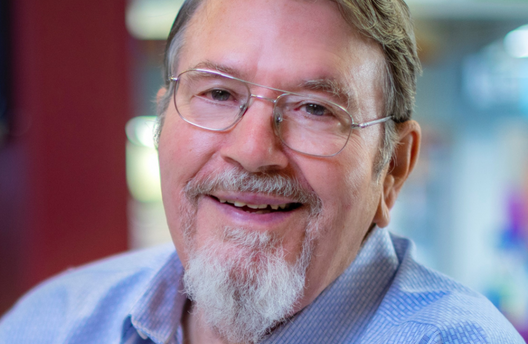
Gary Churchill, PhD
The Jackson Laboratory Nathan Shock Center Co-Director
There are eight Nathan Shock Centers in the Biology of Aging across the country, funded by the National Institute of Aging (NIA) of the National Institutes of Health (NIH). The centers provide leadership in the pursuit of basic research into the biology of aging. Each center brings unique expertise under the leadership of respected experts in the field. AFAR, which manages the Nathan Shock Centers of Excellence in the Biology of Aging Coordinating Center (NSC3) (U24AG056053), will highlight the work of these centers through this series*.
Dr. Gary Churchill is the co-director, together with Dr. Ron Korstanje, at the Nathan Shock Center of Excellence in Aging at the Jackson Laboratory. They have provided joint leadership of the Center for the past decade.
Describe your Research Cores and how they support the mission of your Nathan Shock Center program.
The Animal and Phenotyping Core that I lead functions as the central workhorse of our Center. External requests for pilot projects are evaluated to request access to resources and services that are available through JAX NSC. We evaluate applications on their merit and then try to align projects to use overlapping sets of mice or services and maximize efficiency. For example, we often receive requests for noninvasive interventions that can be coupled with requests for aged mouse tissues.
Our Data & Statistical Core is headed by Dr. Alison Luciano, PhD, a statistician with 10+ years of experience working in gerontology. She works with our phenotyping staff to manage and conduct data quality control analysis, and she has developed new analytical techniques, including longitudinal data analysis and machine-learning methods to interpret our phenotyping and lifespan studies.
The Image Analysis Core, led by Dr. Matt Mahoney, PhD, develops visual vision machine learning tools to do automated histology imaging. He has developed new machine-learning techniques to interpret histology slides and is able to distinguish young from old kidneys. I’m pretty excited about that myself, and look forward to expansion of these tools to look at other tissues.
But the real deliverable is the Research Development Core, also led by Dr. Korstanje, as it reaches out to the aging research community and solicits pilot projects.
Describe what is different about the pilot project selection process at Jax.
Years ago, we found that simply giving out awards to support small research projects was not effective. Other Shock Centers have since followed suit. Instead, we solicit projects from the aging research community and vet them based on their impact and feasibility. We often go back and forth with the prospective pilot project awardees to fine-tune their projects to take full advantage of our Center’s resources and staff expertise. This interactive process helps pilot projects make the most of our resources and run more efficiently.
Sometimes pilot awardees will come onsite to learn specialized techniques. Although we don't expect to be listed as co-authors on their publications, if Ron and I contribute in a way that warrants co-authorship, it tends to be more impactful.
The length and size of pilot projects vary. We always have a reserve of aged mice on hand. If a project requests a brief round of phenotyping or tissue collection from young and old mice, we can take care of it in a matter of weeks.
One pilot that I’m particularly proud of spanned close to 3 years. We ran that study with George Sutphin, PhD, from the University of Arizona, which led to a nice publication. It involved an early intervention with a metabolite intermediate from the tryptophan pathway where we had to age the mice. After the first round, the results looked so remarkable that we thought it had to be wrong. We decided to run the study again and it held up. George on his own ran a bunch of follow-up studies, which also held up.
The staff enjoy working on the pilot projects. They work with new colleagues and learn new techniques.
What discoveries from your Nathan Shock Center do you see as the most promising?
I’m keen on two things. One is our caloric restriction studies. We conducted a very large study on caloric restriction—which wouldn’t have been possible without the NSC infrastructure. Human studies of caloric restriction primarily look at metabolic responses. People will lose weight. People will stabilize their glucose. These are all good things. We want that. But in our study in genetically diverse mice, mice that lose the most weight and have lowered glucose don’t have lifespan extension. So, interestingly, mice that live the longest are the ones that don’t react to the intervention. Those mice seem naturally resilient and robust, and they live longer. We’re excited to have our paper from this study recently published in Nature.
The other discovery is in molecular profiling, particularly RNA and protein profiling. We noticed that changes over time in gene expression and quantitative proteomics are often uncoupled. They can change in opposite directions. They can change in the same direction. Something fundamental to aging is changing in the posttranslational regulation of gene expression. We’re gearing up for more studies to pin down the exact timing of those changes. We’ve been collecting mice every 3 months throughout their lifespan and doing profiling on those mice. It’s open-ended but we’ve learned some things.
As an investigator yourself, what is your approach to aging research and what do you find most interesting?
I’m a statistician turned aging researcher and excited about aging research if for no other reason than it’s such fundamental biology. It opens the door for us to look at things that we wouldn’t have an excuse to look at in disease-centric research. Things like the RNA-protein connections. Aging touches every aspect of biology.
I am not a big believer in pharmacological interventions – they are not always the best solution. Everything your grandmother told you—get plenty of sleep, eat right, exercise, keep up your social connections—those are the keys. It also is a bonus to have an old grandmother. Genetics plays a big role in healthy aging. So we’re back to fundamental biology and genetic diversity research.
What would you consider the biggest obstacles you’re facing at this point?
We face a logistic obstacle using mouse models. Funding cycles at NIH are typically 4 years, but on average, mice lifespans can be 2.5 or 3 years or longer. In our studies with genetically diverse mice, we can extend their lifespan to almost 5 years. The Shock Center buffers these studies by providing a home for keeping the oldest mice around. Short funding cycles are inconvenient for aging research using mice.
Keeping pace with technologies is another challenge, but we do a good job of keeping up.
Where do you hope the field will be in the next 10 years?
I’d like to know whether aging is genetically programmed or whether it’s how we each respond to entropy. How does a living organism keep itself together over time? I’m in the entropy school, but it’s not all willy-nilly. Specific things happen over time, and I would like to drill down on multiple specific aspects of the mechanisms.
I would also like to see the aging field gain respect. It’s trending that way. The meetings are more exciting. But aging research has some baggage. We didn’t know where to look in the beginning. We have more clues now and we are able to do more rigorous studies.
*The content is solely the responsibility of the authors and does not necessarily represent the official views of the National Institutes of Health.