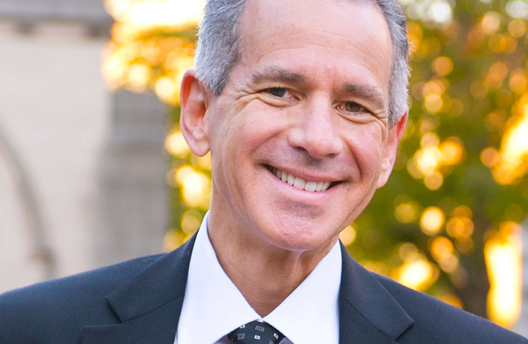
Ask the Expert: Kristine Yaffe, MD, Strengthening Cross-Disciplinary Collaboration in Aging Research Through Clin-STAR
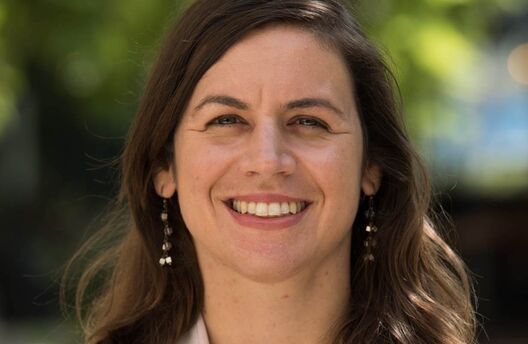
Professor, Scola Endowed Chair, and the Epstein Chair and Vice Chair, Distinguished Professor of Psychiatry, Neurology, and Epidemiology, and Director of the Center for Population Brain Health at the University of California, San Francisco (UCSF)
Multiple Principal Investigator, Clin-STAR
Professor Yaffe is an internationally recognized expert in the field of cognitive aging and dementia prevention.As a champion of multidisciplinary research to advance care of older adults, she has testified before the US Senate, co-chaired the National Academy of Medicine’s Committee on Cognitive Aging, and is an elected member of the National Academy of Medicine. She is a formative leader whose groundbreaking research shows how lifestyle, medical, and environmental factors across the lifespan influence brain health as we age.
She is also a Multiple Principal Investigator of the Clin-STAR Initiative, of the NIH/NIA, for which AFAR serves as the National Program Office. Dr. Yaffe also received support from AFAR is a 2001 Paul B. Beeson Emerging Leaders Career Development Award in Aging Scholar recipient.
AFAR spoke with Dr. Yaffe about her work and the Clin-STAR Initiative. Her responses were edited for brevity.
What event or experience drew your focus to aging research?
I have always been very interested in the brain and behavior; thus, I trained in both neurology and psychiatry. During my clinical rotations and training, I was drawn to older adults. As we age, our brains become more vulnerable, and neurological issues may manifest. I saw the vast spectrum of cognition and behavioral changes in the older patients I saw, and I wanted to understand why there is so much variation and in what capacity neurology and psychiatry interface. I was also struck by the ageism in our society. Older patients were often dismissed, and healthcare workers used “senility” as a synonym for being old. I felt passionately that not enough attention was being paid to older adults, and I wanted to focus my research on methods that can prevent cognitive ailments like dementia, including Alzheimer's disease.
You serve as one of the Multi-Principal Investigators on the Clin-STAR Initiative. What inspired you to become involved, and what progress has the initiative made? And what are some of the most pressing challenges that Clin-STAR is addressing?
While I trained in neurology and psychiatry, I found that the fields were very siloed, even though they both focus on the brain. I saw the extreme need to foster more collaboration. I also wanted to know how collaborations with “below the neck” fields could foster and improve aging research and outcomes. Aging research needs multi-disciplinary approaches to move forward. By engaging clinical and research experts across specialties, Clin STAR has created and supported much-needed bridges between fields.
Clin-STAR has also engaged experts in the basic sciences, so that theories and clinical outcomes can be tested and explored at the cellular level and back in humans. If we are going to make true progress in clinical care, we have to have a robust dialogue with basic science mechanisms and genetics to allow us to understand aging trajectories of individuals and populations. Clin-STAR has fostered a research feedback loop, where clinical findings inform basic research investigations so we can understand what is going on, and the findings from the laboratory bench can be more efficiently tested at the bedside.
As for challenges, there are many institutes and clinicians who do not have large networks or aging-focused groups. There are not a lot of resources for guidance and training in the innovative aging tools that are available. As the NIH and other research foundations have underscored, our population IS aging. Thus, there is also a growing interest and need to understand how we can improve the aging process and increase longevity. Clin-STAR meets these needs and provides an open network and collaborative opportunities. With the overarching goal of taking individual areas of interest and discovery and building effective collaborations.
You also serve as the chair of the Mentoring and Career Development Core for the ClinSTAR Initiative. Could you tell us what the core provides and how it is making an impact on the early-career clinician scientist in the aging research field?
Clin-STAR programs recruit, engage, and support many clinician scientists who are bringing their individual expertise and collaborative spirit to the aging research field. The Mentoring Core works with the other cores in the program to serve the Clin-STAR mission, which is to advance transdisciplinary research, training, and career development in aging. We work as matchmakers and support networking events and opportunities. By connecting people with similar or adjacent interests, they feel less isolated and can learn from each other.
For mentoring, Clin-STAR uses one-on-one opportunities as well a group events to connect leaders with experience to those wanting to grow. Office hours is a unique program that selects an expert and invites anyone to submit questions. Confidential answers and responses during this program range from detailed scientific support to general professional development. Special interest groups have really been able to support specific research foci within aging, and this has fostered collaborative grants and manuscripts, dedicated aging sections at meetings and conferences, and increased awareness.
Clin-STAR also has mechanisms that support early-career researchers to attend conferences and to invite visiting professors who can directly support and teach at spots with fewer available resources. The Clin-STAR website has a wealth of resources and content. One of the most valuable resources is the Clin-STAR database of aging researchers. It is open to the public and can be used to connect and network.
Your medical and research background involves collaborations between disciplines. What are some of the best strategies to make more clinicians and researchers aware of the needs of older adults—“geriatricizing” other disciplines?
When you “geriatricize” something, it means you are looking at the whole person—that can only happen when you collaborate with experts from multiple fields. As clinician researchers, we must get out of our silos. I was shocked by the silos between neurology and psychiatry. If it is happening there where the fields are both focused on the brain, it’s everywhere. The first step to advancing your own research and practice is to acknowledge that you can learn a lot from other fields. Next, know that collaborating is more fun. Different expertise and fields can challenge you and open new doors. Finally, we know that most older patients have ailments and concerns that bridge different fields. You will only truly understand how to truly help your patient if you work with other experts
Aging research is a paradigm for why we need to think of the whole person. We cannot be siloed by our specialty. By geriatricizing other disciplines, we are facilitating needed interactions, and this will create new discoveries. A great example is inflammation. It does not just happen in one organ. You can learn a lot about how inflammation of the kidney works with other organs. By working in multidisciplinary teams, we can understand where else inflammation is and how treating the kidney will affect other body processes. If we only look at renal function, we only see a piece of the picture.
Where do you hope your research and Clin-STAR will be in ten years, and how will it help us all live healthier and longer?
Looking forward, we don’t know what is going to happen next. Right now, being an academic medical researcher is very challenging due to shifting funding and foci. I am concerned that more people will shy away from research because of the uncertainty and stress. I worry that without a focus on aging research, the field will not continue to advance, and that will affect patient care. Thus, Clin-STAR is needed more than ever. By working together and growing together, the growing aging population will have the resources and treatments they need.