Ask the Expert: Andrew J. Scott, MSc, DPhil, on the Role of Geroscience in the Transformation from an ‘Aging Society’ to a ‘Longevity Society’ copy
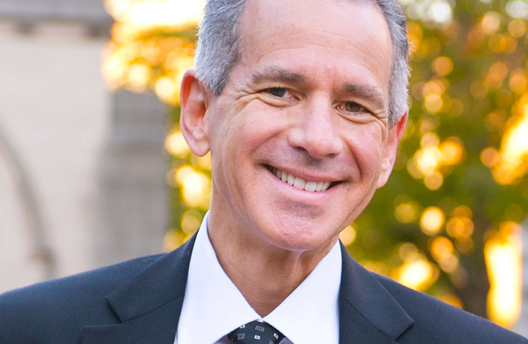
Professor of Economics, London Business School, and Author, The Longevity Imperative
In the world of aging biology, Dr. Andrew J. Scott is best known for his landmark 2021 study that for the first time assigned a monetary value to the societal benefits of a longer healthspan. The paper, in Nature Aging, concluded that increasing healthy life expectancy in the United States by just one year would boost the nation’s economic welfare — its overall level of prosperity and standard of living — by $38 trillion annually, yielding a 3.5 percent increase in the gross domestic product each year.
To coincide with the publication of his new book, The Longevity Imperative: How to Build a Healthier and More Productive Society to Support Our Longer Lives (Basic Books, April 2024), AFAR interviewed him to glean his current thinking about the economic and societal longevity dividends and the role aging biology will play in it. His answers were edited for brevity and clarity.
What prompted this book and what’s the paradigm shift you’re talking about?
I want to get longevity up there with artificial intelligence and climate change as a major force that's going to influence our future, both individually and collectively. It’s blindingly obvious. But the reason that’s not happening is we’re stuck on a doom-and-gloom aging society narrative that just says "Hey, there's more old people, and they just aren't very useful because they get ill, lack capacity, etc.”
With global life expectancy now over 70, for the first time in human history the majority can expect to become old and, in fact, very old. And too many fear getting old. We fear outliving our health, our wealth, our skills, our finances, our relationships, our purpose. And so we have to take action now, as a society, to create a longevity revolution to change how we age and ensure that we age well. That’s what I mean by the longevity imperative.
Of course, since health is our most important asset, the single most important part of this transformation is to get healthspan to catch up with lifespan.
Sounds like you see a role for aging biologists in achieving this longevity revolution?
The great success of our health system has been getting global life expectancy up to 70 by intervening when we get diseases early in life. That's what got us here, but it ain't going to get us to there – a life where we're healthy to 90. So we have to jettison our current health system in favor of one focused on keeping us healthy. It's a pretty radical change.
The biggest global health burden is aging-related disease. And as you well know, if you intervene when you've got an aging-related disease, you're not really going to make someone healthy. Instead, you’ve got to stop that disease from happening. When you do that the gains are huge, because not only do you prevent one disease, but you postpone the second comorbidity. And then you also get a big improvement in the quality of life.
So much needs to change when we want to focus on how we age, including we need ways for monitoring our overall health and have treatments that can maintain it — which starts with moving from a disease-based model to a health-based model of care. And I’m a huge fan of the TAME trial as part of that. We need to direct efforts to things that give us health span gains for the many. [TAME is shorthand for Targeting Aging with Metformin, AFAR’s planned clinical trial hoping to show that diabetes drug delays the onset of some chronic age-related diseases. Doing so would demonstrate the process of getting older is a medical condition that, on its own, qualifies for treatment with FDA-approved medicines.]
Do your fellow economists see things the same way?
Economics is a great discipline, but it hasn't really taken on gains in life expectancy. I’m 58 now and need to behave very differently from my father when he was 58 because I can expect more time. I have to invest more in that future. I've got to have more skills. I need to invest more in my health. All that has nothing to do with changing biology. How we age isn't entirely about the biology of age. It's also about behavior. This is why a very effective way to speed up aging is to give people less money and put them in poorer environments. So I think economics and biologists, in some sense, have got that same notion that age is malleable. They just come at it in different ways.
We've sort of arrived at a state where we almost separate our health from aging, with the idea that aging is a natural phenomenon. But we used to think that smallpox was inevitable, and then we started to treat it. And I think that's sort of the way I think about the biology of aging. I'm an economist, not a biologist, but to me the economy is a bit like the body. Both are very complicated, nonlinear systems subject to shocks. Not an easy thing to control, never going to say “Job done.” I'm sure we will make progress, and there will be a virtuous circle where the better we get at aging, the more interested we are going to be in being to age even better. We started our conversation by saying the most important thing is for health span to catch up with lifespan. Absolutely right. Once healthspan catches up with lifespan, I'm interested in lifespan gains. And then I'm interested in healthspan gains. That's that virtuous circle.
So societies where people can be productive for longer will do best economically?
Right now, the number of people in the workforce has declined from 80 percent of those aged 50 to about a quarter of people at 65. If you could halve that rate of decline, you’d get about another 4 percent of GDP every single year.
Most people stop working because they're ill, or they’ve got to care for someone who's ill, or their skills are out of date or there’s ageism in the workforce. Government pensions, meaning Social Security in the U.S., are a very small reason why.
Wealthier countries are waking up to this idea that health has first-order macroeconomic effects – that if we can keep people well from their 50s onwards, that's good for GDP growth. Now that they are realizing that, I think they're going to start to wake up and see that perhaps aging is the key determinant of that wellness. But of course, the determinants of aging aren't just biological, they're also social, so there'll be a range of policies to try and support that.
Finding ways to keep people productive and healthy for longer yields this three-dimensional longevity dividend. Their productivity pays for their longer lives. The Industrial Revolution created so many resources that we had more to spend on health and education, which meant we ended up with more people. That's what we have to do with longevity. We have to show innovation, ingenuity, investment and have new institutions to make sure these longer lives are healthier for longer and productive for longer. That's how we pay for it. Geroscience will, of course, be a key part of that.
How will the private sector play a part in this transformation?
We're going to need help paying for some of the treatments that come along because of the discoveries of aging biology, because some of them will be quite expensive. Life insurance companies make money from people living for longer, so they should be interested in policies that find ways of paying for this.
There’s far too much discussion at corporations now about the silver economy, which is meeting the needs of older people. That's invariably about adult diapers and cruise ships. We have to focus instead on an evergreen economy, one that begins well before you're old and focuses on staying evergreen, retaining our health and our purpose throughout our lives. That's going to be an enormous market for new foods and beverages and supplements that keep us sharp and help us age better biologically, but also products and services that are about our human capital, our purpose, our relationships.
At the same time, if we are going to be living longer, we've got to think about how we create more flexible career paths so that people don't just carry on at the top forever and ever, because that will be to the detriment of those who come below. This means creating more intergenerational interaction, and less hierarchical institutions.