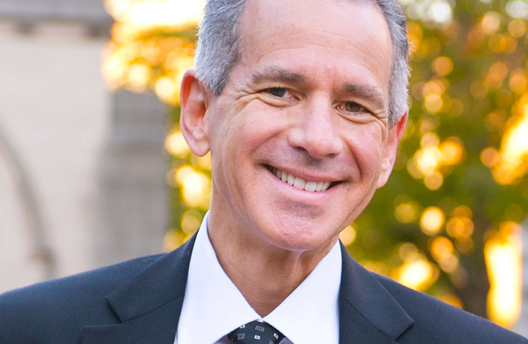
Ask the Expert: 2025 Cristofalo Award recipient Daniel W. Belsky, PhD, on Biomakers and Beyond
Associate Professor of Epidemiology, Mallman School of Public Health, Columbia University Irving Medical Center
2025 AFAR Vincent Cristofalo Rising Star Award in Aging Research
Daniel W. Belsky, PhD, has dedicated his research career to aging research. Specifically, he has advanced our understanding of “biological age” versus “chronological age” and developed methods to measure the pace of aging. His research looks at the intersection of social inequities and aging outcomes and identifies tools and targets that can intervene and improve the quality and length of life.
Upon receiving the 2025 Vincent Cristofalo Rising Star Award in Aging Research, AFAR talked with Dr. Belsky to learn more about his work and where he hopes the field goes next. His answers were edited for brevity and clarity.
What inspired you to focus on aging research?
It may have all begun because I am a second-generation academic. My father was a professor and studied human development. He focused on the early stages, from infancy to adolescence. There is symmetry in that I focus on the latter half of life. However, as my career has developed, I can point to two main reasons why I study aging and disease processes related to aging. First, the groundbreaking work by AFAR investigators and their colleagues established that the biology of aging is the leading cause of chronic disease. These researchers showed that aging was a biological process that could be studied and manipulated in laboratory animals. While I was doing a student and postdoc, experts began to connect the dots between aging biology and the chronic diseases that disable us as we get older. There is huge potential to prevent disease and increase healthspan if we intervene in human aging.
The second inspiration was the realization that aging biology could be a key connector between early life experiences and later diseases of aging. We know that kids who grow up poor, on average, get sick and die younger than kids who grow up rich. And it’s not just one or two diseases that explain this gap; it’s all of them. Nearly every chronic disease is more common in people who grow up under conditions of adversity. This is the problem we face in developing treatments to extend healthspan. It’s hard to nail down a causative mechanism or to optimize intervention strategies because the cause is so distant from the effect, timewise. Research in aging biology pointed to aging-related biological changes happening early in life, maybe from the beginning. To me and my mentors at the time, Terrie Moffitt and Avshalom Caspi, this suggested the possibility that measurements of aging could give us a readout on where people were decades before clinical signs of disease were apparent. Moreover, the biology of aging appeared to contain key aspects of stress (eg, inflammation and metabolic dysregulation), which had until then been the dominant framework for understanding how adversity caused disease. Together the ideas that (1) the biology of aging was the major cause of chronic disease and (2) that changes in aging biology were ongoing from early in life and were potentially mediators of the effects of adverse life experiences on health reoriented my career with the goals of first developing a method to measure changes in aging biology and then deploying that method to discover how we could modify aging to increase healthspan.
Your research bridges biological and social sciences and aims to advance the field of aging research and population geroscience by using existing samples and databases to identify ideal biomarkers and interventions. Could you explain the term "population geroscience" and how it applies to your research and goals?
The core of geroscience is an effort to translate discoveries from experimental biology of aging research in laboratory animals into novel therapies that increase human healthspan. I think the geroscience field is primarily concerned with human clinical studies, especially clinical trials. I use “population geroscience” to refer to research that complements the bench-to-bedside pipeline and focuses on translating aging biology research into human epidemiological studies to understand the natural history of aging and aging variability across social and environmental conditions. I also think a population approach is fundamental to core geroscience research. The development and validation of metrics used to measure treatment effects in clinical trials depend on population research data. So, for me, “population geroscience” means both harnessing the data resources and methods of population science to advance the geroscience field and infusing classical population science with the biology of aging.
The FAST (Finding Aging biomarkers by Searching existing Trials) Initiative aims to determine which targeted and omics-based biomarker approaches are feasible yet innovative enough to advance the development of biomarkers for clinical trials in aging. As Co-Principal Investigator, could you tell me more about this AFAR initiative and expand on the importance of biomarkers in measuring aging?
Human aging takes a long time. We know that the accumulation of molecular damage that ultimately impairs our cells and leads to damage and death is ongoing and starts very early in life. Therefore, effective interventions to slow or reverse damage must also begin early in life, before people get sick. The latency between when we would intervene and when we see the effect of that therapy (disease presence or healthy status) is a long period—10 to 20 years or longer in some cases. This extraordinarily long amount of time makes designing clinical trials to test new therapies for chronic diseases incredibly difficult. So, we need measurements that will allow us to understand whether the interventions are slowing or reversing aging and ultimately building a healthy lifespan in the short term.
What are some of the challenges facing your research?
That 10-20-year trial to study an aging or chronic disease intervention is not feasible in most conditions, yet that evidence is needed for the FDA to approve a treatment. The FAST Initiative is dedicated to finding these useful biomarkers that can identify the
effectiveness of treatments in a shorter time period—ideally somewhere between months and a few years. This type of biomarker is needed because new treatments and interventions need FDA approval, and the FDA requires studies to validate biomarkers. Fortunately, the FDA has approved medications and therapies with gerotherapeutic effects—interventions that positively extend the healthy lifespan. FAST aims to analyze blood samples from completed clinical trials of these interventions to discover molecular signatures of treatment response. Ultimately, by putting together results from multiple trials and experimental studies on aging biology, we can identify common molecular responses that can serve as biomarkers for trials of new therapies. Ideally, that signature could be used as a surrogate endpoint to assess whether new therapies will work. In the worst case, FAST will generate a new data repository, leading to a new generation of biomarkers.
You are receiving AFAR's Cristofalo Rising Star Award. We look forward to your contributions in years to come. Where do you hope your research will be in ten years, and how will it help us all live healthier and longer?
I hope we will move on from developing aging biomarkers to evaluating the effectiveness of biomarkers—not only of clinical interventions but public health programs and policies. So, not only will we be working with clinical trials to evaluate new interventions, but we will also be using aging biomarkers to track population health and aging in large-scale national and international studies and driving policy changes to promote healthy longevity worldwide.