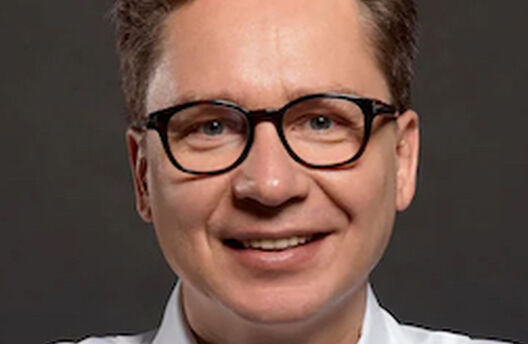
Ask the Expert: Ming Xu, PhD, on the state of senescence research and his 2023 Vincent Cristofalo Rising Star Award
Dr. Xu is focused on cellular senescence, a major contributor to the fundamental process of aging. His pioneering research uses both novel mouse models and human tissues to examine the role and underlying mechanism of senescent cells in various age-related diseases. His goal is developing drugs that eliminate these old, dysfunctional and damaged cells from the body, expecting that would alleviate a range of diseases and allow people to live longer and healthier.Supported by AFAR grants in 2017, 2019, and 2022, his findings have laid the foundation for several ongoing clinical trials on senolytics.
After announcing him as the 2023 Vincent Cristofalo Rising Star Award in Aging Research recipient, AFAR talked with Dr. Xu to glean insight into his work. His answers were edited for brevity and clarity.
What got you interested or inspired to do research in the field of aging?
I came to the U.S. to pursue my PhD degree in metabolism at the University of Kansas Medical Center but got really interested in aging research when I started my postdoc with James Kirkland at the Mayo Clinic. Two things motivated me the most. The first was watching my relatives back in Shanghai, my parents and grandparents, suffering a lot as they got old. It was very sad to see, so I decided if there was any way I could help to any extent that would make me feel good. Also, not only is there a huge need for aging research, because of the growing number of aging people in the United States and worldwide, but also this field is very promising. Every day, we see some new exciting findings that investigators in the field are making to really achieve our goal, to help people live longer and live healthier.
What are the most promising things happening in senescence research?
There's a lot to say. Senescent cells are actually a very small number of cells, damaged cells, that accumulate with aging or other pathological conditions. Although very small in number, they do a lot of very bad things. So our research is on what to do to effectively and safely get rid of these cells. The first exciting thing is that research in many parts of the world has repeatedly shown that killing these cells in mice can alleviate a wide range of age-related tissue dysfunction or diseases in those animals. The next exciting thing is the growing number of clinical trials going on right now Some have been published and, although at a very early stage and at a very small scale, they show exciting results about the safety and feasibility of using senolytics, the drugs that can specifically kill cells.
Currently, there are clinical trials in a number of human diseases including Alzheimer's disease, diabetic kidney disease, idiopathic pulmonary fibrosis, and osteoporosis.
What are the biggest obstacles at the moment?
The thing I get worried about is people becoming overly enthusiastic or over optimistic. People really want to slow down aging and live longer. Maybe they have read some papers or stories in the media and start to take medicines or drugs—doing some kind of clinical trial by themselves, and without professional medical guidance. This could be very dangerous because we don't have enough evidence at this point. Everything looks promising so far, but without a very rigorous large-scale clinical trial, I don't feel comfortable saying these drugs can really make people healthier. We don't yet have enough evidence to indicate these drugs could be very safe for the long term and might be effective to slow down aging in humans. So we have to ask people, “Please do not t take these drugs at this point,” because you never know what will happen to them.
Where do you hope the field will be in a decade?
I hope we can better understand what is going on with aging in humans on a single cell level, because of their highly heterogeneous nature. With a lot of advanced technologies like single-cell sequencing , I really hope we can understand on a single-cell level how a tissue changes with aging. And then how can we make more precise medicines to target these changes including accumulation of senescent cells. In addition, I really hope to see whether or not senolytics can help people's health just as they did for the mouse. We should be able to get an answer in the next 5 to 10 years. We just have to be patient, but we are getting there.
And what do you hope you will be doing in 10 years?
I will keep doing basic aging research. But I hope I will devote myself a bit more to the clinical trial effort and to translating what we found in basic science to the bedside.