The Innovator Awards program funds research scientists pursuing groundbreaking studies in the field of cognitive aging. Now in its fifth year, the successful grant program has already supported eight investigators in previous years through the collaboration and support of AFAR and the McKnight Brain Research Foundation. Dr. Acker and Dr. Gibson will each receive $750,000 for an award period of three years.
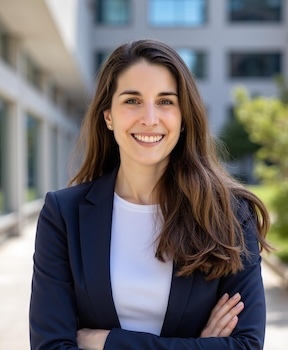
Dr. Acker's research project is titled "Inflammatory Hangover and Cognitive Aging." As a practicing neurosurgical anesthesiologist and scientist, she leads the Anesthesiology, Cognitive Neuroscience, and Engineering Research (ACkER) Lab at Duke University. The ACkER Lab is rethinking how to protect the aging brain before, during, and after surgery. Her multi-disciplinary team studies how the brain, heart, and immune system communicate to support recovery and long-term brain health. Using wearable sensors, brainwave recordings, and gentle, noninvasive nerve stimulation, they explore how small, repeated bouts of inflammation may quietly accelerate cognitive aging—a phenomenon called “the inflammatory hangover”—and how to prevent it. By translating discoveries in brain–body communication into practical tools, the ACkER Lab aims to help older adults recover from physiological stress more quickly, think more clearly, and maintain independence longer.
Explore more of Dr. Acker’s research on her lab’s website here.
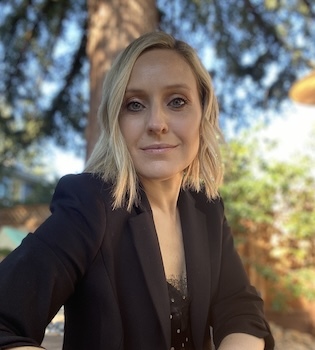
Dr. Gibson's research project is titled “NSPR1 as an intersectional regulator of myelin and cognition in aging." Dr. Gibson’s research focuses on myelin-forming oligodendroglia, the cells that wrap around and insulate the axons connecting neurons, allowing for efficient neural communication within the brain. Specifically, her lab aims to understand how these cells contribute to the regulation of sleep and cognition in aging. Her lab identified alterations in neuropeptide S signaling, a known regulator of sleep and cognition, in oligodendrocytes with aging. Her AFAR-supported research focuses on deciphering the role of neuropeptide S signaling between neurons and oligodendroglia in the regulation of sleep, and how this may change with aging and contribute to aging-associated cognitive decline.
Explore more of Dr. Gibson’s research on her lab’s website here.
AFAR Expert in the News: Scholar-in-Residence Raiany Romanni-Klein, PhD, discusses socioeconomic impact of extending healthspan on the Aging Well Podcast
AFAR Grantees in the News: New research co-authored by Grantees Andrea Francesca Salvador, PhD, and Christoph Thaiss, PhD, on the possible gut–brain connection driving age-related memory loss published in Nature