What inspired you to pursue aging research?
In my doctoral work, I developed human stem cell-based platforms to investigate complex genetic diseases. During this time, there were some pretty incredible advances in aging biology. Notably, interventions such as heterochronic parabiosis, caloric restriction, and partial reprogramming provided compelling evidence that aspects of normal brain aging may be reversible. Concurrently, innovative strategies for tracking and measuring biological aging, ranging from comprehensive transcriptomic atlases to methylation-based epigenetic clocks, rapidly emerged. This convergence of breakthrough interventions and opportunities to measure them has created a unique opportunity to apply stem cell and translational neurobiology approaches to better understand and develop novel therapeutics for human aging.
In your view, what does AFAR mean to the field, and what does it mean for you to receive an AFAR grant now?
The mission of AFAR, sponsored by the Glenn Foundation for Medical Research, is to support healthy aging through biomedical research. Through this mission, since its founding, AFAR has been at the forefront of advances in aging biology, providing invaluable support. Being awarded an AFAR postdoctoral fellowship is a tremendous honor I am extremely grateful to have received. As a senior postdoctoral fellow, I am at the point in my career where I am planning to transition to an independent faculty position. Resources afforded to me by my AFAR fellowship will allow me to dive headfirst into the field of aging biology, continue my research, generate preliminary data for my independent laboratory, and establish invaluable connections to others in the field.
What is exciting about your research’s potential impact?
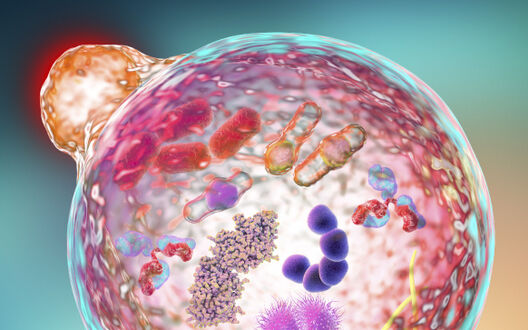
As a stem cell and neurobiologist, I employ disease modeling and drug discovery approaches to study neurodegenerative disorders such as Alzheimer’s Disease, amyloidosis, and amyotrophic lateral sclerosis. Modeling normal human aging using these strategies, however, has historically been limited because stem cell-derived brain cell types remain developmentally immature. My work seeks to apply knowledge gained through heterochronic parabiosis experiments to develop methods to artificially age stem cell-derived brain organoids in vitro. Developing such a model would, for the first time, allow us to study human aging in easy-to-manipulate, physiologically relevant systems. At the same time, utilizing large-scale transcriptomic datasets, my work identifies drug candidates that mimic experimental “rejuvenation” strategies. Excitingly, both approaches can be used to improve human stem cell-based models and drug discovery for normal aging across tissue types and aging-related diseases.
How would you describe your research to a non-scientist?
Aging impacts all of us on the molecular and cellular levels, yet few therapies exist to slow or reverse its effects. Promising research in mice suggests brain aging can potentially be reversed: transfusions of young mouse blood enhance brain function in older mice, while old blood accelerates aging in young mice. Building on these findings, my research pursues two strategies. First, I aim to “artificially age” human stem cell-derived brain organoids by exposing them to blood from aged human donors and analyze changes to aging-associated features. Second, I will apply computational methods to identify compounds that mimic the rejuvenating effects observed in old mice given young blood. Through these approaches, I will integrate expertise in stem cell biology and neurobiology with specialized training in aging science from AFAR, advancing the discovery of novel therapeutics and human-based models to study and target age-related brain decline.