What inspired you to pursue aging research?
I’ve always being fascinated to understand which molecular and cellular changes favor onset and progression of chronic diseases. For this reason, I’ve spent my training as molecular biologist trying to elucidate molecular events that can facilitate cancer development. During these studies, I quickly learned that an aging tissue environment represents a key contributor to tumorigenesis. At the same time, I also realized that certain molecular and cellular perturbations recur in most, if not all, age-associated conditions. I then decided to focus my research career to understand what are these perturbations with the goal to use the knowledge acquired for the development of anti-aging interventions.
In your view, what does AFAR mean to the field, and what does it mean for you to receive an AFAR grant now?
I had my postdoctoral training in the USA and became very familiar with AFAR and its incredible contribution in promoting and supporting aging research. AFAR not only help to advance research and to support young investigators, but also represents a community platform for scientists and non-scientists to exchange knowledge and information. To receive an AFAR grant now that I live and work in the Netherlands is especially important, as it allows me and my laboratory to expand our work on understanding the aging process and to search for antiaging interventions, but also to build networks with outstanding scientists in various disciplines.
What is exciting about your research’s potential impact?
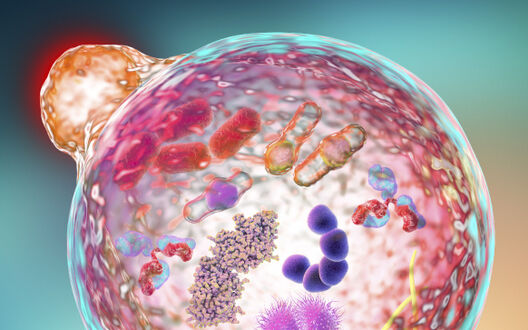
Our goal is to develop anti-aging interventions based on eliminating certain types of damaged cells – senescent cells – which accumulate in aging tissues and are visible at sites of many age-related pathologies. What is exciting about this approach is that targeting senescent cells might reduce onset and progression of several morbidities at the same time. In addition, it allows for short-term and intermittent interventions, as once senescent cells are removed it takes quite some time for them to accumulate back and being detrimental. Thus, an anti-senescence strategy might represent a potent and safe way to extend healthy longevity in most individuals.
How would you describe your research to a non-scientist?
Our research attempts to elucidate the mechanisms that allow certain types of old and damaged cells, called senescent cells, to accumulate and survive in aging tissues. The reason we are doing so is because senescent cells represent one of the most conserved hallmarks of aging, and their presence in old organisms favor multiple dysfunctions and diseases. We aim to use the information derived from understanding senescence-associated mechanisms for developing novel interventions with a strong potential to extend healthy longevity.