What inspired you to pursue aging research?
Aging is such a fundamental biological process shared across species, yet much remains unknown about how age-related change occurs, for example how the brain changes during both normal and pathological aging. I develop viral-molecular tools that have the capability of assessing neuronal connections and how they change with experience and have always been fascinated by the potential of leveraging these tools to understand more about how the brain ages and how this alters the functional properties of neuronal connections in the brain.
In your view, what does AFAR mean to the field, and what does it mean, for you, to receive an AFAR grant now?
I am a huge believer that science advances the quickest by fostering communication between those with different perspectives. I am not trained as an aging biologist, but as a basic molecular biologist focused on understanding fundamental aspects of brain connectivity. Interactions with aging biologists have helped to hone the research questions that I aim to pursue in this area, and receiving an AFAR grant is validation that my ideas are worth studying. I in turn look forward to validating those who believed in my ideas.
What is exciting about your research’s potential impact?
Little attention is paid to how pathology spreads in the brain, yet it is clear that shared mechanisms control changes that govern both normal and pathological aging. If this indeed occurs via synaptic connections, it provides a series of potentially druggable targets to slow disease progression, which could in turn provide an improved quality of life for the aging population. Perhaps the most exciting part is, given that mechanisms of aging-related changes and neurodegenerative conditions may be shared, that our research has the potential to impact a wide variety of both normal aging-related processes and disease states.
How would you describe your research to a non-scientist?
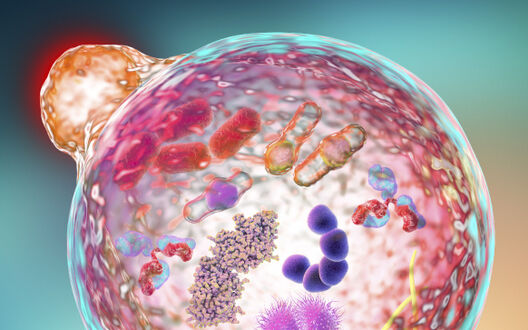
Viruses get a bad rep, and for good reason. Viruses are very good at what they do, and more often than not, that is to harm people. But controlled modifications to these viruses allow us to leverage the skills that these viruses have, but also cause no harm to us or other animals. Following this principle, we can use the fact that some viruses can move between connected neurons in the brain to understand how the brain is connected, and how information, or disease processes, travel in the brain. Many decades of observations from postmortem human and animal brains suggest that not only brain diseases like Alzheimer’s disease and Parkinson disease, but also normal aging processes such as cellular senescence appear to travel in the brain in a manner consistent with brain connectivity. This is fascinating because this suggests that diseases tend to traverse the metaphorical city of your brain via established roads (the neuronal connections), rather than simply spreading to whomever is closest. Practically, it means then that if we can close traffic on those roads –stop the spread of toxic agents at synapses –we could slow or halt disease processes. This is turn could provide a potentially new way to combat age-associated disease states in the brain.