What inspired you to pursue aging research?
During my PhD studies, I worked on understanding the regulation of the heat shock response, which is an evolutionarily conserved mechanism that is activated in response to misfolded and damaged proteins. As a postdoc, I worked on host-microbe interactions and a novel host-directed approach against antibiotic-resistant bacteria. Both heat shock response and microbes are implemented in aging and age-dependent protein conformational diseases, including Alzheimer’s and Parkinson’s diseases. However, very few laboratories work at the interface of these two fields, so when I started my own laboratory, I knew this was an unexplored research area that needed much attention. I began exploring the role of microbes in protein conformational diseases and my research group started making discoveries that can change how we approach and treat neurodegenerative diseases.
In your view, what does AFAR mean to the field, and what does it mean, for you, to receive an AFAR grant now?
Out of all ailments, age-dependent neurodegenerative diseases are the most debilitating, as there is no cure or effective treatment. In addition, over 90% of these diseases arise sporadically, and we do not understand why. Their prevalence is also constantly increasing, which collectively affects our aging population. AFAR is the leading organization that addresses issues that affect our geriatric population and supports research that improves the quality of life. Aging is a process that affects everyone and having an organization that supports healthy aging is essential. The funding support from AFAR will open new opportunities for my research program to expand into aging research. For a junior faculty, such support comes at the right moment as it provides an initial investment into a life-long research project that will likely reveal new knowledge that will contribute to improving the quality of life among the aging population.
What is exciting about your research’s potential impact?
Antibiotics not only treat bacterial infections but can also irreversibly affect the composition of our microbiota, possibly contributing to the pathogenesis of age-dependent neurodegenerative diseases. Understanding which microbes exactly affect protein folding and related stress responses will open new opportunities to develop diagnostic, prophylaxis, and therapeutic interventions.
How would you describe your research to a non-scientist?
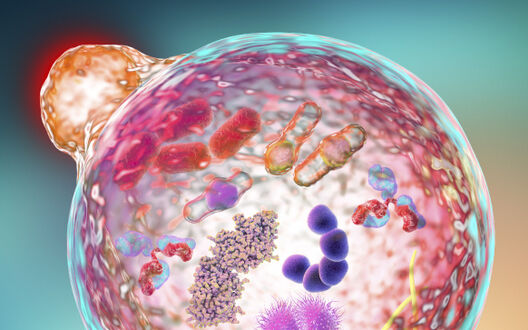
Our gut is home to an estimated 2,000 unique bacterial species that collectively form a factory that makes molecules that affect how our bodies function. While we are beginning to make connections between changes in our gut microbiota and age-dependent neurodegenerative diseases, we do not understand which bacteria play important roles and how they do it. My research explores these two unknowns.