What inspired you to pursue aging research?
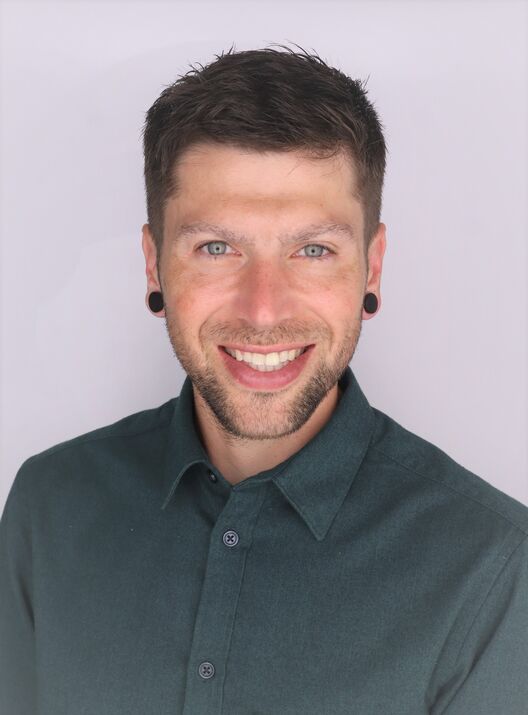
As a young child, my mother regularly took me to work with her at a health care center and nursing home. She cared for older individuals in various ways, whether that was assisting in normal daily activities (e.g., getting dressed, eating) or taking them on planned outings (e.g., to the fair, fishing). Seeing her passion and love for helping older individuals instilled a strong desire for me to do the same. Through my academic and athletic career (as a distance runner), I realized that I could follow in her shoes by researching healthy aging. Now, I am trying to care for older individuals as she did, but in my own way. I hope my research will one day help advance what we know about aging systems and skeletal muscle, in particular, as it pertains to age-related muscle weakness.
In your view, what does AFAR mean to the field, and what does it mean, for you, to receive an AFAR grant now?
AFAR is an outstanding organization at the pinnacle of aging research. For many years, AFAR funding has paved the way for outstanding research and helped countless scientists support highly impactful laboratory projects. Being awarded the Glenn Foundation for Medical Research and AFAR Grant for Junior Faculty is a true honor. This grant is not only prestigious but also a critical avenue for young principal investigators to receive funding to help provide a pathway to scientific independence. To me, receiving support from AFAR is a significant step for my career and research goals and the culmination of hard work and determination.
What is exciting about your research’s potential impact?
The most exciting aspect of my laboratory’s research is that we incorporate repeated physical stressors into our studies. That is, we subject muscle to repeated bouts of contractions and then analyze how the neuromuscular system recovers and adapts to these persistent episodes of physical stress. By using this specific paradigm, we can measure neuromuscular resiliency and identify molecular pathways that may contribute to impaired resiliency observed in some older individuals, specifically those most susceptible to sarcopenia and frailty.
How would you describe your research to a non-scientist?
The most exciting aspect of my laboratory’s research is that we incorporate repeated physical stressors into our studies. That is, we subject muscle to repeated bouts of contractions and then analyze how the neuromuscular system recovers and adapts to these persistent episodes of physical stress. By using this specific paradigm, we can measure neuromuscular resiliency and identify molecular pathways that may contribute to impaired resiliency observed in some older individuals, specifically those most susceptible to sarcopenia and frailty.