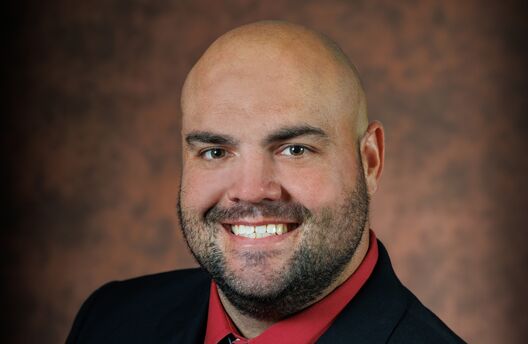
What inspired you to pursue aging research?
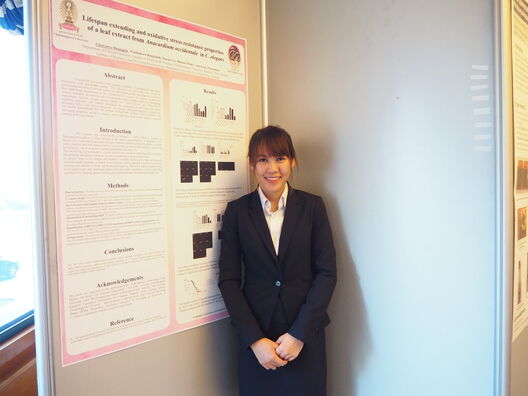
My passion is to understand the mechanisms of human aging. Why do some people age faster or slower than others? Geroscience is super fascinating to me, especially genetics and nutrition. I want to be a leader in aging research. I have always had a healthy curiosity for science and I realized in college that I excelled in my coursework and senior research project. It truly satisfies my deep passion for helping people. I choose to study sciences with a Medical Technology major in college. I received second-class honors and my bachelor’s degree. These positive experiences led to my pursuit of a doctoral degree in Clinical Biochemistry of Molecular Medicine. I also hold a medical technologist license. During my doctoral studies, I was a part-time medical technologist in the local public hospital in Thailand. This turned out to be a great opportunity not only to learn and practice medical skills but also to fulfill my lifelong passion to help people live healthy long lives.
As a doctoral student, my thesis was focused on the neuroscience of aging. I investigated the underlying mechanisms of human aging and age-related degenerative diseases. I favor interdisciplinary approaches to biological questions and have incorporated cell biological and biochemical approaches in my research. I am now a post-doctoral research fellow in the biology of aging. I enjoy setting my own schedule, learning at my own pace, and designing my own experiments. Moreover, I also enjoy teamwork. In my research team, we learn and support each other which has lead to wonderful discoveries. This is the right job for me as I make scientific discoveries and help people at the same time. My research goals are to understand the molecular mechanism of aging as well as nutrigenetics for using diet as a means to circumvent genetic predisposition and prevent or reduce the severity of the age-related diseases.
In your view, what does AFAR mean to the field, and what does it mean for you to receive an AFAR grant now?
This AFAR-supported project will offer new knowledge to our understanding in molecular mechanisms of metabolic diseases and will likely be highly relevant to human health and have great biological significance to geroscience as they will establish WDR23 as a new marker of metabolic diseases.
The Glenn Foundation for Medical Research Postdoctoral Fellowship in Aging Research is my first research grant. This AFAR grant will improve my research profile and provide valuable data for understanding the human aging mechanism which fulfill my long-term goals to become an expert scientist in aging field. This AFAR-supported project will provide me with support to finish my post-doctoral research and will make me a stellar candidate for an independent investigator position at a research university. This AFAR fellowship will enhance my scientific career in the field of geroscience to better integrate into the community and provide support at this critical junction in my research training as transitions to independence which is greatly help to accomplish my immediate and long-term goals.
What is exciting about your research’s potential impact?
Healthy aging requires the constant and proficient control of protein homeostasis – also known as proteostasis. WDR proteins plays critical roles in proteostasis that include removal of damaged proteins and substrate activation, but the identity of specific substrates of WDR proteins remains elusive and our understanding of how they participate in basic cellular processes and disease states is understudied. The goals of my project, “DCAF11/WDR23-dependent proteostasis mediates glucose and lipid handling,” are critical for geroscience and public health as they aim to: (1) define WDR23-dependent proteostasis as a novel axis of glucose and lipid homeostasis in diabetes and metabolic disease states; and (2) develop the relationship between WDR23 and insulin degrading enzyme as an important new target pathway for diabetes research and future development of therapeutics. We believe the results from this AFAR-supported project will be of great biological significance for the systemic control of glucose and lipid homeostasis in human health and disease.
How would you describe your research to a non-scientist?
Over the past few decades the incidence of type 2 diabetes has been increasing among older populations, but the etiology of these age-related conditions is not completely understood and the need to identify genetic markers and pathways that influence the diseased state is pressing. WDR23 is a substrate receptor of the Cul4-ubiquitin ligase complex and acts as a sophisticated regulator of cellular proteostasis. We have developed a Wdr23(-/-) human HepG2 cell line, a Wdr23KO mouse model, and primary cell lines to utilize a multidisciplinary and multi-model approach to define the role of WDR23 on glucose and lipid homeostasis at the molecular, cellular, and organismal levels. Our newly reported substrates of WDR23 include the Holliday junction resolves GEN1 and cytoprotective transcription factor NRF2, both of which impact oxidative stress response, which is an important hallmark of aging and metabolic disorders. Recently, we began characterization of mice lacking WDR23 and discovered an age-dependent loss of glucose homeostasis. These Wdr23KO animals fail to maintain insulin sensitivitu and are obese (higher fat, but normal body weight) while maintaining normal glucose tolerance as compared with age-matched controls. Utilizing proteomic approaches to characterize these Wdr23KO animals, we identified a significant increase in the levels of the insulin degrading enzyme (IDE) in liver tissue, which we confirmed by western blot analysis. In addition, IDE activity is induced in Wdr23KO livers, which supported the higher steady state levels of IDE protein. Furthermore, the insulin signaling cascades, AKT and MAPK, were dysregulation in Wdr23KO mice. We have defined a novel role for the WDR23 substrate receptor in the maintenance of glucose homeostasis, which involves insulin degrading enzyme (IDE) proteostasis and insulin signaling pathway. The results from this AFAR-supported project will be of great biological significance to support WDR23, an NRF2 chaperone protein, as a new marker of metabolic diseases and a molecular target for the development of therapeutics for age-related diseases, especially diabetes.