What inspired you to pursue aging research?
My Ph.D. training and early post-doctoral research were in gene regulation and nuclear hormone receptor/coregulators signaling. It was not until the later years of my post-doctoral training that I started to think deeply about aging research. In the last year of my post-doc training, we discovered a mammalian 12h ultradian oscillator that controls rhythmic proteostatic stress response, independent from the canonical 24h circadian clock. Since the decline of proteostasis is causally associated with aging and many aging-related diseases, it occurred to me back then that this 12h oscillator might be implicated in the regulation of aging. I was extremely fortunate to find a faculty position at the newly established Aging Institute at UPMC/University of Pittsburgh in 2018, and my aging research officially took off ever since. By studying this 12h oscillator, we recently discovered a novel role of nuclear speckles in global proteostasis control, and we believe rejuvenating nuclear speckles is a new therapeutical approach to globally boost proteostasis to delay aging. My previous rigorous training in gene regulation turns out to be indispensable for my current aging research!
In your view, what does AFAR mean to the field, and what does it mean, for you, to receive an AFAR grant now?
AFAR is at the forefront of aging research, playing a pivotal role through its robust grant support, public advocacy, and efforts in educating policymakers about the extensive, transformative potential of geroscience. Receiving an AFAR grant is not only a prestigious honor but also a testament to the recognition and validation of one's research in the field. Personally, being awarded this grant represents a milestone—it acknowledges the impact and relevance of my work and provides an invaluable boost, propelling me into the next phase of my career in aging research.
What is exciting about your research’s potential impact?
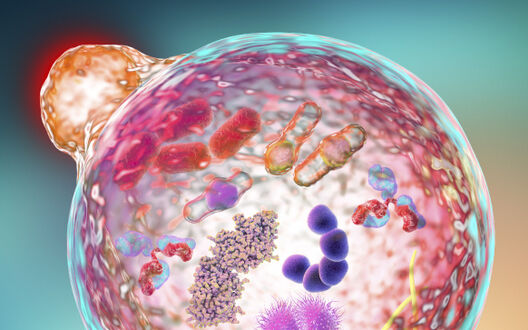
Our preliminary data indicates that pharmacological rejuvenation of nuclear speckles can greatly reduce protein aggregation and improve proteostasis, and we are hoping that our research can pave the way for more future research focusing on targeting nuclear speckle liquid-liquid phase separation to alleviate proteinopathies.
How would you describe your research to a non-scientist?
Our research is multidisciplinary, spanning biological rhythms, protein metabolism, stress response and aging. Briefly speaking, we are interested in figuring out how the spatiotemporal control of proteostasis dynamics is achieved inside each cell, how the dyregulation of such control accelerates aging and aging-related diseases, and whether we can devise new strategies to re-establish such controls to combat aging.