What inspired you to pursue aging research?
The science of aging is a fascinating topic that I became familiar with during graduate school and later as postdoc in the Eric Verdin Lab at the Buck Institute of Aging. I think aging is interesting because it’s a biological process that affects everyone and is a major risk factor that helps drive many diseases, including those we don’t always associate with aging such as metabolic disease. We also do not understand very simple questions associated with aging such as why aging occurs and how? These questions help drive my scientific curiosity to help better understand the many cellular processes and molecular pathways that drive the aging process, and how we can fine tune them to help people live healthier lives.
In your view, what does AFAR mean to the field, and what does it mean for you to receive an AFAR grant now?
The American Federation of Aging Research is an amazing organization and resource for the aging field. Its support for aging research has funded many laboratories and fueled many ground breaking studies in aging. Additionally, the leadership is composed of a who’s who of the top aging researchers. Likewise, having looked at past recipients of the Glenn/AFAR Junior Faculty Award, I see many top aging researchers that I look up to and have inspired my own career in aging. Thus, I am very honor and humbled to receive the this award and to be part of the AFAR research community.
What is exciting about your research’s potential impact?
I am excited about my project investigating the role of senescent macrophages as a driver of inflammaging and altered NAD+ metabolism in aging. My prior research was one of the first studies to find a link between senescent cells and altered NAD+ metabolism in aging, and this future study will dig deeper and investigate how altered immune cell activation and inflammation further influence NAD+ metabolism and disease. We hope by studying inflammation and the aging immune system, we can impact many aging-related diseases including metabolic disease, cancer, and neurodegeneration.
How would you describe your research to a non-scientist?
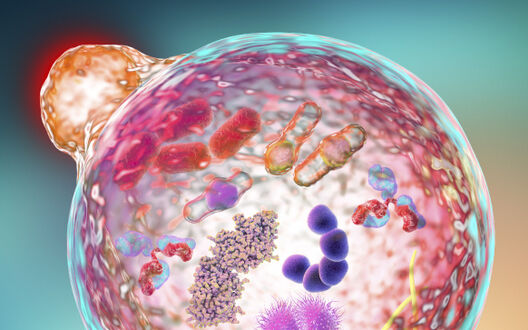
In simple terms I study how the immune system changes as we age. As we get older our immune system performs less efficiently, and impacts not only how our body protects itself from pathogens, but also many vital processes that regulate our bodies function and health. Thus, I am interested in understanding what aging immune cells look like, how aging immune cells impact the aging process, how to find old immune cells more efficiently, and strategies to help rejuvenate our immune system to prevent or limit diseases associated with aging.