What inspired you to pursue aging research?
Growing up, I had a very close relationship with my grandparents. They lived with our family and were a huge part of my life. As they got older, my grandmother struggled with memory and mobility issues and was confined to a wheelchair while my grandfather remained active and was rarely sick until the end of his life. Consequently, from a very young age, I was haunted by the question: why do people age differently? As I learned more about aging research in grad school and in during my post-doctorate work, I realized the important distinction between chronological and biological age and was inspired to pursue research in aging biology.
Now, as an Assistant Professor at the University of Pittsburgh School of Medicine, my lab in the Aging Institute strives to answers these fundamental questions. We study how we can best assess biological age and what we can do to promote healthy aging and improve quality of life for all. Our most recent works include studying the underlying biology of major weight-loss during aging, role of lipid metabolism in senescence and aging, as well as understanding causal metabolites that drive rapid aging.
In your view, what does AFAR mean to the field, and what does it mean for you to receive an AFAR grant now?
I am truly honored to receive this AFAR/Hevolution grant and excited to continue my work in aging research. AFAR is an incredible organization—advancing scientific discovery and public understanding of aging research, as well as providing opportunities for the next generation of scientists in this important field. This award will enable myself and my lab to pursue newer tools for the detection of biological age, in particular senescent cells. Detection of biological age is a formidable challenge and requires a cross-disciplinary approach. This AFAR/Hevolution award will allow us to push boundaries and collaborate with a physicist, Dr. Rama Bala to integrate expertise on geroscience and nanoscience. We envision that this opportunity will further scientific discovery in aging research, as well as make these discoveries accessible to the most vulnerable population.
What is exciting about your research’s potential impact?
Detection of senescent cells with a unified biomarker could transform medicine and society, allowing us to rapidly and non-invasively monitor one’s biological age. Our cross-disciplinary approach will not only advance our understanding of a cell-fate decision that impacts health, but also help diagnose and treat multiple age-related diseases by tracking senescent cells. Development of our nanoscale tool can help with risk stratification in determining the type of intervention needed to minimize the impact of age-related diseases. This transformative approach will be a first step towards developing a personalized medicine practice to promote healthy aging.
How would you describe your research to a non-scientist?
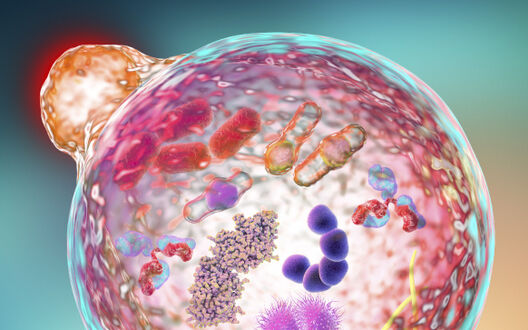
As we age, our bodies accumulate sick/senescent cells. These cells, often called zombie cells, cannot divide, promote inflammation, damage neighboring cells, thus driving disease and aging. While the immune system typically helps the body rid itself of these senescent cells, this process slows down as we age and leads to the accumulation of senescent cells. Research is underway to identify and develop senotherapeutics—drugs which can help the body eliminate these cells—however some significant challenges exist. Through the development and use of our novel nanoscale detection tool (NDT), we can start to identify, target, and eliminate these senescent cells, which will lead to fewer age-related diseases and healthier aging.