Ask the Expert: Morgan Levine, PhD, on Measuring Biological Age
What happens when you take the power of computer processing and apply it to aging research? A revolutionized approach to biomedical research through bioinformatics. AFAR connected with Morgan Levine of Yale, an expert on this approach, to learn how computational research is impacting our understanding of biomarkers of aging, the potential to reprogram cells to extend healthspan, and more.
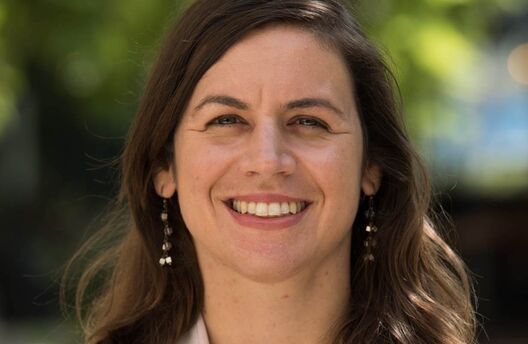
Morgan Levine founded the Laboratory for Aging in Living Systems (Levine Lab), which seeks to discover mechanisms of aging that can be targeted to delay or prevent disease. The Levine Lab bridges bioinformatics and the use of computational methods to molecular biology and the identification of drivers to cellular aging. At the Yale School of Medicine, she is a member of both the Yale Combined Program in Computational Biology and Bioinformatics, and the Yale Center for Research on Aging. With an interdisciplinary approach, Dr. Levine seeks to integrate methods from bioinformatics, cellular biology and biostatistics in her aging research.
How has computer science and programming evolved aging research?
Aging is one of the most complex processes in nature. While many have characterized it based on a small number of hallmarks, in reality, the changes that occur with aging are innumerable. They are also highly interconnected within a hieratical framework. This makes it very hard to comprehensively study aging using traditional experiments. In my opinion, the best way to start piecing together what the changes are that occur with aging, but more importantly, which ones drive aging, is through computational approaches. With such approaches, we can begin to develop more complete theoretical models of the aging systems and interrogate how it can be pushed in one direction or another—accelerating or decelerating the aging process. Luckily the last decade has brought about a boom of biological data and it is via computational approaches that we will continue to glean critical insights into the biology of aging—much of which was impossible to uncover when examining only a handful of genes or other biochemical/physiological changes at a given time.
What is biological age and how is it distinctly different from chronological age?
As everyone knows, chronological age is the number of years, months, days, or hours since birth. Conversely, biological age is based on the biological state of a living system—the system could be a cell, tissue, or whole organism. While there is no agreed upon definition, I like to think of biological aging as the loss of resilience of a biological system or how far a system has diverged from an “optimal” state. Every living system acquires small changes (due to errors, adaptations, etc.). These changes accumulate over time and lifespan and while not all are detrimental; enough are and this leads to dysfunction, decline, and eventually death.
Aging changes us all. We see it in the mirror, feel it in our bodies, and experience it as higher rates of disease and eventually risk of death. Traditionally we have attributed these changes to chronological age, but in reality, biological aging is what underlies these phenomena. The bright side is that while chronological age ticks at a predictable and unstoppable rate, biological aging is malleable. It’s the main reason we observe such diversity in lifespan and disease incidence across organisms. Even among humans, biological aging causes differences in risk for major chronic diseases, and even susceptibility to infectious disease—as has been observed with COVID-19.
What is an epigenetic clock and what can it tell us about the biology of aging?
Historically, we have always turned to chronological age to depict the time dependent changes underlying risk. That’s because biological age has been extremely difficult to measure. This is why scientists have been working on methods to try to estimate it, some of the most popular of which are epigenetic clocks. Although many people refer to it as “the epigenetic clock,” or sometimes, “the Horvath clock,” in reality, there are dozens of epigenetic clocks that have been developed over the last decade. What they have in common is that they attempt to estimate the biological age of a cell, tissue, or organism based on the levels of DNA methylation. DNA methylation refers to a chemical change that occurs at specific sites on the human genome. It is thought that the addition of methyl groups (hence, “methylation”) to these sites alters gene expression or accessibility of that specific region of the genome. Interestingly, the pattern of DNA methylation seems deeply related to aging. Because the pattern of change is so predictable, researchers have used it to generate estimates of biological age—but not all clocks are equal. Often, we find that different clocks predict different biological ages for the same person or group. Not only do the clocks sometimes give different answers, but they also have different associations with aging outcomes. Most of the early clocks, like the original Horvath clock, are great at predicting the chronological age of the person that the sample was drawn from, while other more recently developed clocks are better at capturing how far along the aging process an individual is. This is critical to consider when we start thinking about how these clocks can and should be utilized for testing interventions, understanding differences in risk, or even discovering drivers of the aging process.
As your team continues to understand and measure biological age with epigenetic clocks, how does this have potential to change the way we age? How have biomarkers impacted the field of aging research?
Through our work on epigenetic changes in aging, we have become increasingly interested in the field of epigenetic (or cellular) reprogramming. We know that the epigenetic landscape is remodeled with aging, bringing about widespread consequences for cellular and tissue identity, integrity, and functioning. But, what if like computer programmers who can restore a broken operating system, we could discover how to recode or restore the original biological program in our cells? While this may have seemed like science fiction a few years ago, the discovery by Yamanaka and Takahashi proving that aged cells can be converted back into fully functioning embryonic-like stem cells, suggests this may be possible. However, to do this successfully, we must first better understand the code that is written in our epigenome. Currently, my lab is combining cellular experiments with advanced computational modeling to determine 1) what drives epigenetic aging changes, 2) how/why these changes relate to functioning, disease etiology, and physiology, and 3) which of these changes are most responsive to cellular reprogramming and at what point during the transition from a somatic cell (any cell, except for sperm and egg cells) to a pluripotent cell (self-renewing cells) do they occur.