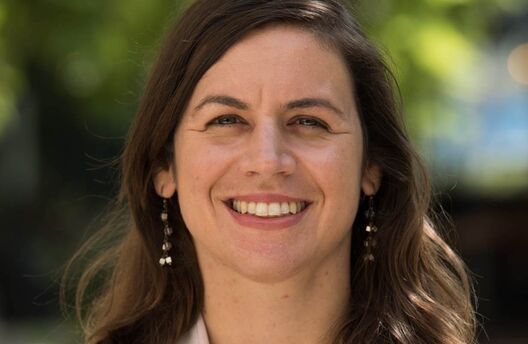
Ask the Expert: Jamie N. Justice, PhD, on senotherapeutics, the future of geroscience, and her 2022 Vincent Cristofalo Rising Star Award
Assistant Professor in the Department of Internal Medicine, Gerontology & Geriatric Medicine, Wake Forest University School of Medicine
Sticht Center for Healthy Aging and Alzheimer’s Prevention, the Jarrahi Research Scholar in Geroscience Innovatio, Wake Forest
Co-Leader of the Integrative Biology Core of the Wake Forest Claude D. Pepper Older Americans Independence Center
A translational scientist, Dr. Justice’s research aims to evaluate the functional role of biological processes underlying human aging, and to move interventions targeting these processes from animal models to clinical trials. This includes: 1) developing frameworks for biomarkers and aging outcomes in clinical trials of lifestyle interventions and gerotherapeutics, and establishing functional consequences of cellular senescence in human aging and obesity. She has co-authored a range of leading publications with senior researchers in major journals, and she serves on the leadership team of the new NIA-supported Geroscience Education and Training Network. In doing so, she is an influential advocate for the advancement of geroscience, which seeks to target biological aging processes to prevent or delay functional decline and age-related chronic diseases collectively, rather than one at a time. Upon receiving the 2022 Vincent Cristofalo Rising Star Award in Aging Research, AFAR connected with Dr. Justice in this Ask the Expert Interview to gain insight into her unique research perspectives.
What inspired you to focus your career path on aging research?
My career is a result of curiosity, incredible people, and luck. Initially my graduate work at the University of Colorado Boulder (UCB) included a series of studies on fatiguability in men and women across the lifespan which ignited my passion for working in research with older adults. I remember a discussion with an older research participant: she spoke about her anxieties about losing the ability to play with her grandchildren, or to navigate a large shopping complex, and of worries that she may one day walk too slowly to cross safely at a crosswalk. Her story was integral to my decision to work with older persons to extend function, health, and independence. This also led me towards questions about why we lose physiologic function as we age – and importantly – how we can intervene to prevent or delay functional decline. I've also been continually curious about why and how organisms age and the biological processes that lead to an increased risk of mortality with age.
Your work in geroscience is part of a groundreaking paradigm shift in aging research. What is particularly inspiring about geroscience?
At the start of my postdoc, the first publications on geroscience appeared. The ‘Hallmarks’ and ‘Pillars’ of biological aging suggested a set of processes that could be targeted for interventions testing; this had a galvanizing effect on the field. This early exposure to geroscience was incredibly formative: I am the first of a generation of scientists who are trained to approach geroscience not as a radical idea, but as a practical approach. The idea that these common biological processes underlie aging and may lead to new interventions formed the foundation of my work.
What truly sets geroscientists apart is the break from traditional disease dogma. Traditional translational scientists develop a specialization in one specific disease or disease class. They may uncover a new mechanism implicated in that specific disease, then begin a process from drug development to clinical trials in a known population with a known disease endpoint for intervention testing.
But in geroscience, we turn this process on its head. We are not looking for drugs that target a specific receptor to treat a defined single condition or disease with a well-recognized endpoint. We are uncovering best approaches to target multiple pathways and yield meaningful results across diseases that may share few traditional clinical risk factors other than age. The goal is to impact healthspan and lifespan broadly, but we may also uncover new treatments for specific hard-to-treat chronic age-related diseases along the way.
You are helping move research into clinical trials, particularly around senotherapeutics. Tell us more about this process and its promise.
In the absence of an FDA-recognized endpoint, two predominant approaches to translate basic geroscience knowledge into human trials have emerged. In one, we may test a single therapeutic agent in a number of different age-related diseases, to evaluate if the findings converge across these different trials. This approach has been used to great effect in testing senotherapuetics – drugs that may mediate the negative effects of accumulated senescent cell burden. The alternative approach is to develop an outcome that reflects healthspan or lifespan to test in trials. This requires a consensus group of investigators, clinicians, and stakeholders to work with regulators to approve this endpoint or use in trials. This is critically important for progress, but still unresolved.
I was fortunate to work with the Translational Gersocience Network (TGN) when senolytic agents were proposed for translation to clinical trials. The goals of the TGN were to develop common resources to accelerate interventions testing. The TGN leaders gave me the opportunity to lead translation of senolytics to trial in patients with idiopathic pulmonary fibrosis (IPF), from protocol development to clinical testing. This was important to establishing proof of concept. Perhaps more importantly was the process and frameworks that were established from this first “use case” of the TGN. We initiated a team-based system for shared protocols and data management to accelerate progress in testing geroscience-guided interventions. This experience also uncovered just how much basic research was needed to fully understand cell senescence as a target for drug development, and opened research areas that will extend far beyond testing senotherapeutics.
The Vincent Cristofalo Rising Star Award in Aging Research specifically honors young scientists. How can we encourage more young people to get involved in aging research?
Aging is a long process; building resources and a workforce to support the science of aging also requires longevity. Investment in research and education networks and fostering leadership are vital to progress in geroscience. I am co-developing the Geroscience Education and Training Network (GET Network). Through the GET Network we are working to create an interdisciplinary workforce in translational geroscience through curated educational materials, lectures, and training opportunities.
The cornerstone of my early career were scientific networks that focused on intentional engagement opportunities for early career investigators. This includes opportunities to not just attend meetings but to present, write proceedings papers, and participate in skills-building workshops. I'm also inspired by efforts to support leadership development in early career researchers. For example, I'm grateful for the mentorship, supported training, and intentional transition of leadership within the Wake Forest Claude D. Pepper Older Americans Independence Center (WF OAIC) and beyond. Fostering autonomy, development, and leadership for early career investigators is vital to establishing the field of Geroscience.
Dr. Justice will present her lecture, “Breaking Ground in Translational Geroscience: From Biomarkers to Clinical Trials," at the Gerontological Society of America (GSA) 2022 Annual Scientific Meeting. Learn more and RSVP here.